Cost of Living in Morocco and What Moving There Really Costs
Monthly budgets in dirhams, rent by neighborhood, bills, health cover, schools, the cash you need on day one, and the residency steps that come with it.
How Much Does It Cost to Live in Morocco?
Living in Morocco costs about 5,700–9,500 MAD ($580–$970) a month for a single person on a lean budget, 13,400–21,800 MAD ($1,370–$2,220) for a comfortable single or couple life in a big city, and 29,200–52,500 MAD ($2,980–$5,360) for a family with one child in international school. Your total depends on three choices: which city you pick, whether you eat and shop like a local, and whether you need an international school or a car. The table below builds each monthly budget line by line, in Moroccan dirhams (MAD).
- Single, lean
- About 5,700–9,500 MAD
- Single or couple, comfortable
- About 13,400–21,800 MAD
- Family, one child in international school
- About 29,200–52,500 MAD
- Minimum wage (private sector)
- 3,422.72 MAD a month
| Monthly cost | Lean single, cheaper city | Comfortable single or couple, big city | Family, one child in international school |
|---|---|---|---|
| Rent | 2,500–4,000 | 6,000–9,000 | 12,000–20,000 |
| Groceries | 1,200–1,800 | 2,500–3,500 | 4,000–5,500 |
| Eating out and coffee | 400–800 | 1,500–2,500 | 1,500–3,000 |
| Electricity, water, gas, internet, phone | 600–900 | 800–1,300 | 1,200–2,000 |
| Transport | 200–400 | 600–1,500 | 2,500–4,000 (one car) |
| Health cover and out-of-pocket care | 300–600 | 500–1,500 | 2,000–4,000 |
| School fees (one child) | None | None | 2,500–7,000 |
| Part-time home help | None | None | 1,500–3,000 |
| Leisure, clothes, gym, trips | 500–1,000 | 1,500–2,500 | 2,000–4,000 |
| Monthly total | About 5,700–9,500 | About 13,400–21,800 | About 29,200–52,500 |
| Roughly in US dollars | About $580–970 | About $1,370–2,220 | About $2,980–5,360 |
The assumptions: the lean budget is a single person in Agadir, Fes, Meknes or Kenitra who cooks at home and uses taxis and trams. The comfortable budget is one or two adults in a one-to-two-bedroom flat in Casablanca, Rabat, Marrakech or Tangier, with a mix of local and imported food and some dining out. The family budget adds one child in an international school, part-time help and one car. Dollar figures use about 9.8 MAD per US dollar.
How to use this: Treat the ranges as planning numbers, not quotes. Rent and school fees swing the total most, so settle those first. To add your own flights, insurance and trips, use our budget calculator.
For context, a single person spends about 4,566 MAD a month excluding rent according to Numbeo figures reported by Morocco World News in January 2026, which sits between our lean and comfortable budgets once you add a flat. Headline inflation was slightly negative in August 2026 (minus 0.3% year on year, according to the national statistics office), but food prices rose faster earlier in the year, so build in a margin of 5–10%.
Cost of Living by City and Neighborhood
City averages hide the real spread. A flat in Casablanca’s Ain Diab can cost three times a flat in Marrakech’s Guéliz, and the same city can offer both. These ranges come from 2026 listing portals and property reports. Asking prices are usually higher than what tenants finally agree.
| City | Popular areas | Rent (MAD a month) | Notes |
|---|---|---|---|
| Casablanca | Maarif, Gauthier, Racine | About 8,000–12,000 for 80 m² | Ain Diab and the Anfa side of the coast can reach about 18,000. Sidi Maarouf and the outskirts are cheaper but traffic is heavy. |
| Rabat | Agdal, Hay Riad, Souissi | About 7,000–10,500 for 80 m² | Rabat has overtaken Casablanca as the dearest city for rent in some 2026 reports. Salé is the budget option, linked by tram. |
| Marrakech | Guéliz, Hivernage, Victor Hugo | About 5,000–9,000 for 80 m² | Guéliz starts near the bottom of that range. Hivernage and villas with a pool cost far more. Medina riads are priced as tourist stays. |
| Tangier | City center, Malabata, Iberia | About 6,000–11,000 for a 1–2 bed flat | Prices vary widely because listings mix modest flats with large sea-view apartments. Al Boraq makes Casablanca a 2 hour train ride. |
| Agadir | Founty, Talborjt, Sonaba | About 4,000–7,500 for a 1–2 bed flat | The cheapest of the five big expat cities. Rents rise in winter when long-stay visitors arrive. |
| Fes, Meknes, Kenitra | Ville Nouvelle districts | About 2,500–4,500 for a modest flat | Roughly 30–50% below the big five. Fewer international schools, clinics and English speakers. |
Which city fits your situation
Casablanca suits people who need the job market and the biggest range of international schools and clinics. Rabat is calmer and orderly, popular with diplomats and public-sector staff, and is now the priciest for rent. Marrakech has the most developed expat community and the best flights, but summer is very hot. Tangier is the closest to Europe and is linked to Casablanca by the Al Boraq train, so see our transport guide for fares. Agadir is the cheapest of the big five and suits retirees, surfers and remote workers who want a beach and sunshine through the winter.
Tangier ranked ninth among the most expensive African cities on Numbeo’s 2026 index, the highest of any Moroccan city on that list, even though rents there stay moderate compared with some other African capitals.
Renting a Home in Morocco: Rules and Traps
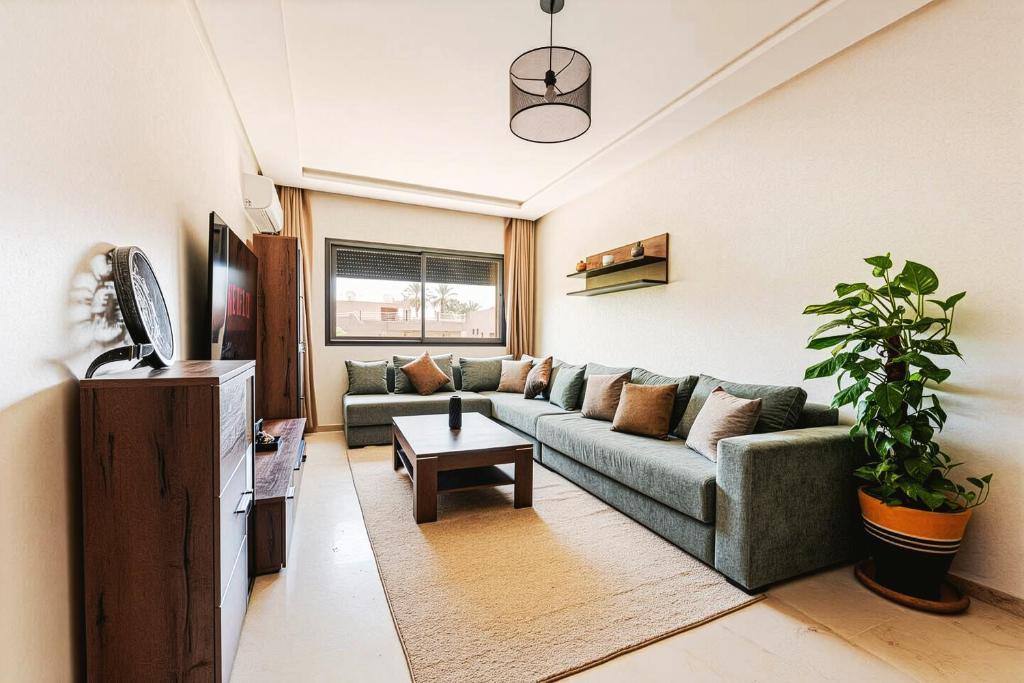
Residential leases fall under Law 67-12, which applies to foreigners and Moroccans alike. The most useful rules are that the lease must be in writing, that a move-in and move-out inspection is required, and that the deposit cannot exceed two months’ rent. Lease length is negotiated and one year, renewable, is the norm. Rent can only rise if the lease allows it.
Landlords generally need a legal reason and proper written notice to end a lease, so do not accept a verbal promise to leave. The law sets no notice period for tenants, so agree one in the contract, usually one to three months. Have the contract legalized and keep a dated copy of the inspection report with photos.
Watch out: Do not pay any rent until the contract has been officially legalized. Ask whether the advertised price includes the building service charge (syndic), and confirm that the person you are dealing with is the actual owner or their authorized agent.
The Cash You Need on Day One
Most cost-of-living pages stop at monthly rent. Moving costs far more in the first month because deposits, fees and paperwork all land together. For a flat at 8,000 MAD a month, a realistic day one cash need is about 16,000–32,000 MAD for the flat alone: a deposit of one or two months, an agency fee of up to one month, and the first month’s rent. Add roughly 3,000–8,000 MAD for residency paperwork, and furniture if the flat is empty.
| One-off cost | Typical amount | Notes |
|---|---|---|
| Security deposit | Up to 2 months’ rent | Law 67-12 caps the deposit at two months and it should be returned within a month of handing back the keys, less justified deductions. |
| Agency or broker fee | About 1 month’s rent | Common with agencies and independent brokers (samsars). It is negotiable and some expat-focused agencies waive it. |
| First month’s rent | 1 month | Paid on signing. Do not pay anything before the lease is written and legalized. |
| Furnished premium | About +1,100 MAD a month | A Mubawab rental report found about 8,800 MAD for furnished flats against 7,700 for empty ones. An empty flat often means no kitchen appliances or lights. |
| Residency paperwork | About 3,000–8,000 MAD | Official stamps are a few hundred dirhams. The rest is photos, sworn translations, apostilles and travel to the prefecture. |
| Utility set-up and SIM | About 300–800 MAD | Water and electricity meters can need a deposit. Fiber installation is often free on a contract. |
| Health cover, first premium | Varies by age | Sort this before arrival so the first clinic visit is covered. See the health section. |
Emergency reserve: One relocation guide suggests holding at least 5,000 euros as a reserve for the first months. It covers delays in the residence card, a longer deposit refund in your home country and unexpected repairs.
Utilities, Internet and Phone Bills
Electricity is the bill that surprises newcomers. It is not heavily subsidized for households, tariffs rise with consumption, and there is little central heating, so winter electric heaters and summer air conditioning can double a bill. Water is far cheaper.
| Cost | Typical price (MAD) | Notes |
|---|---|---|
| Electricity | About 150–500 MAD a month | Residential tariffs are tiered, so heavy users pay a higher rate per kWh. Air conditioning in summer and electric heaters in winter push bills up. VAT on electricity and water was phased up across 2024 to 2026. |
| Water | About 60–150 MAD a month | Cheap compared with electricity. Some providers take an upfront deposit and draw it down. |
| Butane gas (12 kg bottle) | About 40–50 MAD | Subsidized and used for cooking and often the water heater. Subsidies are being phased down, so check the current price. |
| Home fiber internet | About 250–500 MAD a month | Maroc Telecom listed 100 Mb/s at 400 MAD, 200 Mb/s at 500 and 1 Gb/s at 1,000 from May 2025. Orange and inwi have cheaper entry plans. Compare before you sign. |
| Mobile plan | About 100–250 MAD a month | A large-data postpaid plan is at the top of that range. Prepaid SIMs are cheaper if you do not need a contract. |
| Building service charge (syndic) | About 100–400 MAD a month | Often not included in the advertised rent in apartment blocks with a lift, guard or garden. Ask before you sign. |
Groceries and Eating Out

Food is where Morocco is most obviously cheap if you shop like a local. Fresh produce, bread, eggs and chicken from the weekly souk or a neighborhood shop cost a fraction of Western prices. Dairy, salmon, cheese and imported brands in supermarkets such as Marjane cost closer to US prices. For one person, about 1,200–1,800 MAD a month of groceries is realistic on a local diet, and 2,500–3,500 MAD if you buy a mix of imported goods.
| Cost | Typical price (MAD) | Notes |
|---|---|---|
| Eggs, dozen | About 18–22 MAD | Supermarket prices. |
| Milk, 1 litre | About 6–8.5 MAD | Imported or specialty milk costs more. |
| Chicken, 1 kg | About 25–40 whole, 45–60 fillets | Sources differ widely because they mix whole birds and fillets. |
| Beef or lamb, 1 kg | About 80–130 MAD | Prices jump before Eid al-Adha and Ramadan. |
| Tomatoes, potatoes, oranges, 1 kg | About 3–8 MAD | Seasonal and cheapest at the weekly souk. |
| Olive oil, 1 litre | About 45–80 MAD | Local oil is much cheaper than imported. |
| Local lunch (tagine, grill, sandwich) | About 25–40 MAD | Where Moroccans eat. Tourist areas charge about double. |
| Mid-range restaurant | About 80–150 MAD a person | Western-style cafés and brunch places in expat districts can sit above this. |
| Imported beer, 0.33 litre | About 25 MAD | Alcohol is sold in licensed shops and venues, and costs much more than in Europe. |
Healthcare and Health Insurance for Expats
Morocco runs a mixed system of public hospitals, the AMO mandatory insurance and a private sector that most expats use. Employees are normally enrolled in AMO by their employer. If you are self-employed, retired or working remotely, you usually need private cover, because the better clinics sit outside AMO. Most doctors work in Casablanca, Rabat and Marrakech, so access is thinner in smaller towns.
| Cost | Typical price (MAD) | Notes |
|---|---|---|
| Private GP visit | About 100–400 MAD | Lower in smaller cities, higher in clinics aimed at expats. |
| Specialist visit | About 300–600 MAD | Most specialists are in Casablanca, Rabat and Marrakech. |
| Dental care | About 300–800 MAD | Routine work is cheap. Implants and orthodontics cost more. |
| Private hospital stay | About 1,000–3,000 MAD a day | Clinics often price by procedure package, so ask for a written estimate before admission. |
| Childbirth in a private clinic | About 10,000–20,000 MAD | Caesarean sections cost more than vaginal births. |
| Local private health plan | About 3,000–8,000 MAD a year | Basic cover for a healthy adult. Premiums rise steeply with age and cover level. |
| Expat or international plan | About 500–3,000 MAD a month | A very wide range because age, country of cover and deductible all change the price. Get quotes. |
Watch out: The European Health Insurance Card is not valid in Morocco. Residence permit renewals and student visas can require proof of health cover, so keep your policy documents in English or French.
Schools and Home Help for Families
School fees are the biggest swing factor for families. An international school can cost as much as the rent for a good flat. Home help, by contrast, is cheap and widely used.
| Cost | Typical price (MAD) | Notes |
|---|---|---|
| Private nursery | About 1,000 MAD a month | Local private nurseries, by city and district. |
| French-curriculum school | About 30,000–50,000 MAD a year | Lycée Français Louis-Massignon in Casablanca listed about 30,700 for nursery up to about 48,700 for high school. Check the current fee schedule. |
| British or American curriculum school | About 70,000–85,000 MAD a year | British International School Marrakech listed about 72,900 for primary and 83,800 for secondary. Registration fees are extra. |
| Cleaner, per session | About 200 MAD | A typical session runs four to five hours. |
| Full-time housekeeper | About 2,000–3,000 MAD a month | Agree hours, days off and social security up front. |
Always ask each school for its current fee schedule. Registration fees, re-enrolment fees, canteen, transport and uniforms are often charged on top of tuition.
Getting Around: Car or No Car?
In Casablanca, Rabat, Marrakech and Tangier, many residents live without a car by combining petit taxis, trams and ride apps. Petit taxis are metered, with most rides around 10–30 MAD, and trams cost about 6–8 MAD. A car makes sense for families, for living outside the center and for weekend trips, but fuel, tolls and insurance add up. Diesel was about 13.3 MAD a litre and petrol about 14.2 in July 2026.
For fares between cities, see our Morocco transport guide, and for car costs see car rental prices in Morocco.
Can You Live in Morocco on Your Income?
A quick way to check yourself against the budgets above. The figures assume you pay Moroccan living costs only, and exclude tax in your home country and travel.
| Monthly income | What it covers |
|---|---|
| $1,000 a month (about 9,800 MAD) | A lean single life in Agadir, Fes, Meknes or Kenitra. Tight in Casablanca, Rabat and Marrakech. |
| $2,000 a month (about 19,600 MAD) | Comfortable for one person in any big city, or a couple in a mid-priced one. No international school. |
| $3,500 a month (about 34,300 MAD) | A family with one child in an international school at the lower end of the family range. |
| $5,000 a month (about 49,000 MAD) | A family with one or two children, a car and good private cover in Casablanca, Rabat or Marrakech. |
For context, the private-sector minimum wage is 3,422.72 MAD a month, and the average local salary is much lower than expat incomes. That gap is why services are cheap and why prices in expat-heavy districts are rising.
Moving to Morocco: Residency and Setup
This is the practical order that works for most people. Rules depend on your nationality and your reason for staying, and they can differ between prefectures, so treat this as a map and check details locally.
| Step | What to know |
|---|---|
| Enter visa-free for up to 90 days | Citizens of many countries, including the US, UK and EU members, enter without a visa for up to 90 days. Check your own nationality before you book. |
| Find a home and a written lease | Most residence files need an address. Keep the signed lease and an inspection report. |
| Apply for a carte de séjour | Required to stay beyond 90 days. You apply at the local prefecture or police office, and many guides advise starting within the first month. You receive a récépissé (receipt) first, and the card can take from a few weeks to a few months depending on the city. |
| Prepare the paperwork | Expect a passport, photos, proof of address, proof of income or an employment contract, and often apostilled and translated civil documents. Requirements differ between prefectures, so ask locally. |
| Open a bank account | Banks usually ask for your residence card or proof that you applied. A Moroccan account makes rent, bills and salaries easier. |
| Arrange health cover | The European Health Insurance Card does not work in Morocco. Get a plan before you need a clinic. |
Working, freelancing and remote work
A residence card does not automatically allow you to work. A salaried job needs a work contract approved through the authorities, and freelancing generally means registering as a self-employed business. Morocco has no dedicated digital nomad visa, and entering visa-free does not cover remote work. If you plan to stay more than 90 days, take advice from a Moroccan lawyer or accountant about your own case.
Watch out: Document names and fees differ between sources. One guide quotes 200–600 MAD for the card depending on the category, another quotes 200–400 MAD for the stamp. Confirm the exact fee at your prefecture before you budget.
Mistakes That Cost Newcomers Money
Judging rent from tourist riad prices
Riads and medina stays are priced for visitors. A long-term flat in a residential district costs far less per square metre.
Paying before the lease is legalized
Get a written lease with an inspection report and keep every receipt. Do not hand over a deposit on a verbal promise.
Budgeting from one city’s average
Rent in Rabat or Casablanca can be double that of Agadir or Fes. Use the city table, not a national figure.
Forgetting the first winter
Many flats have no heating and can feel damp. Ask about insulation, heaters and the last winter’s electricity bill.
Counting on remote work being legal on a tourist stamp
Morocco has no dedicated digital nomad visa, and visa-free entry does not cover working. Take advice on your own case for stays beyond 90 days.
Skipping health cover
Routine care is cheap, but a hospital stay is not. Insure before arrival.
Ignoring currency rules
The dirham is a controlled currency. Keep exchange receipts and do not plan to carry large amounts of dirham cash out of the country.
Moving in summer with no air conditioning
Inland cities such as Marrakech and Fes are very hot in July and August. Check cooling before you commit.
Cost of Living in Morocco FAQ
How much money do I need to live in Morocco per month?
A single person living lean in a cheaper city can manage on about 5,700–9,500 MAD a month. A comfortable single or couple life in Casablanca, Rabat or Marrakech costs about 13,400–21,800 MAD. A family with a child in international school needs about 29,200–52,500 MAD. These are bottom-up estimates built from the line items on this page, not survey averages.
Is Morocco cheap to live in?
Compared with the US and most of Western Europe, yes. Numbeo-based reporting in January 2026 put overall costs in Morocco about 54% below the US, and rent about 79% lower. It is not cheap everywhere: imported goods, electronics, cars, alcohol, international schools and private hospital care cost close to European prices, and rents in Rabat, Casablanca and Tangier have risen.
What is the cheapest city to live in Morocco?
Smaller cities such as Fes, Meknes and Kenitra are the cheapest, with modest flats from about 2,500–4,500 MAD. Among the larger expat cities Agadir is the cheapest for rent. Rabat and Casablanca are the most expensive.
How much is rent in Morocco?
It depends on the city and district. Listing data in 2026 puts typical asking rents for apartments around 7,000–10,500 MAD in Casablanca, Marrakech, Rabat and Tangier, and a little lower in Agadir. A flat in a quiet district or smaller city can be half that. Furnished flats cost about 1,100 MAD a month more in one report.
How much upfront cash do I need to rent a flat?
For a flat at 8,000 MAD a month, expect about 16,000–32,000 MAD on day one: a deposit of one or two months, an agency fee of up to one month, and the first month’s rent. Add residency paperwork and any furniture. The legal deposit cap is two months’ rent.
Can foreigners rent a home in Morocco?
Yes. Morocco’s residential lease law (Law 67-12) applies to foreigners and Moroccans alike, and requires a written lease and a move-in inspection. Landlords will usually ask for your passport and, for longer stays, your residence card or proof that you applied for it.
Do I need a visa to move to Morocco?
Many nationalities, including US, UK and EU citizens, enter visa-free for up to 90 days. To stay longer you apply for a carte de séjour. It is usually granted for one year at a time, with longer cards available later. Rules depend on your nationality and reason for staying, so confirm with a Moroccan consulate or your local prefecture.
Does Morocco have a digital nomad visa?
No. As of 2026 there is no dedicated digital nomad visa. Visa-free entry covers tourism, not working, so remote workers who plan to stay beyond 90 days generally need a residence permit. Get professional advice for your own situation.
How much is health insurance for expats?
Local private plans for a healthy adult start at about 3,000–8,000 MAD a year, while expat and international plans commonly run about 500–3,000 MAD a month depending on age and cover. Get quotes for your own age and country of cover. The European Health Insurance Card is not valid in Morocco.
How much are electricity and internet?
Electricity runs about 150–500 MAD a month depending on home size and air conditioning, water about 60–150 MAD, and home fiber about 250–500 MAD. Maroc Telecom’s published fiber plans from May 2025 were 400 MAD for 100 Mb/s, 500 for 200 Mb/s and 1,000 for 1 Gb/s.
What is the minimum wage in Morocco?
For private-sector industry, trade and services, the minimum wage rose 5% on 1 January 2026 to 17.92 MAD an hour, or 3,422.72 MAD a month for 191 hours. This is the legal floor for employees, and a useful reminder of how local prices are set.
Is it cheaper to live in Morocco than in Spain or Portugal?
Usually yes, particularly for rent, eating out and household help. Some community estimates put a moderate lifestyle in Morocco at well under the cost in Portugal, Spain or France. The gap narrows for imported goods, international school fees and private healthcare.
Can I live in Morocco on a pension of $1,500 a month?
Yes, comfortably in the cheaper cities and reasonably in Marrakech or Agadir if you rent a modest flat outside the most expensive districts. At about 14,700 MAD you sit between the lean and comfortable budgets above. Budget separately for health cover, because it is the largest variable.
How These Figures Were Put Together
Figures without “about” come from official or directly published sources: the 2026 private-sector minimum wage, the lease deposit cap in Law 67-12 and the fiber prices Maroc Telecom published in May 2025. Everything marked “about” is an estimate built from 2026 listing portals, property reports, price surveys, insurer guides and expat reports, and it is rounded to a range.
The monthly budgets are our own bottom-up calculation from the line items on this page, not a survey average. Sources disagree on several prices, such as chicken and residence card fees, so we show ranges. Confirm anything that affects a large decision, such as residency requirements, school fees and insurance, with the authority or provider directly. Exchange rates used: about 9.8 MAD per US dollar and 10.7 MAD per euro.
Last reviewed: October 2026
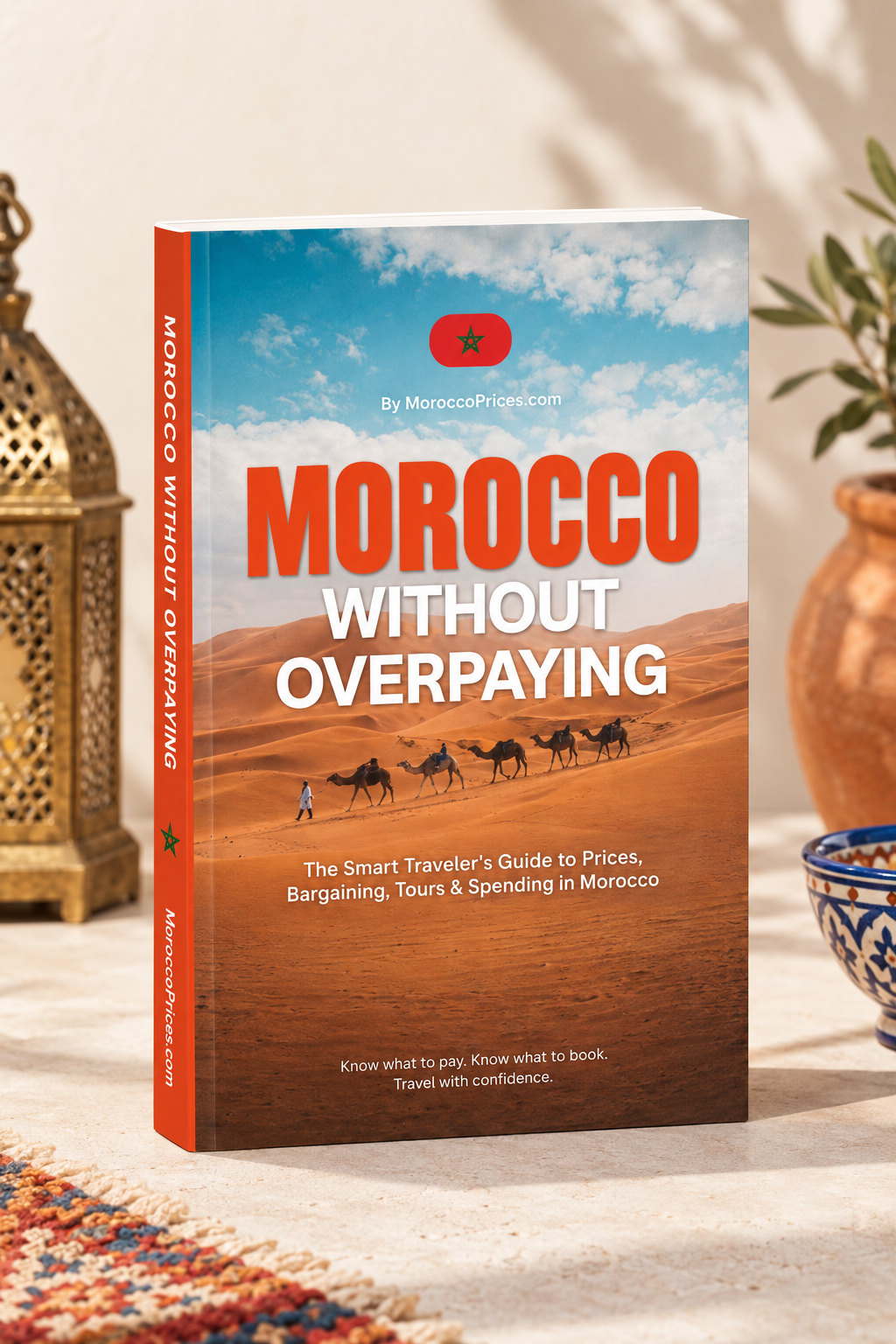
MoroccoPrices Ebook
Launch priceEverything on This Site, Turned Into a Decision-Making Guide.
Morocco Without Overpaying puts our price research into a practical ebook you can use before and during your trip — taxis, tours, souks, accommodation and the mistakes to avoid.
$6
$12
30-day money-back guarantee · Instant digital delivery
Keep Planning Your Move
Browse prices across Morocco, read our travel guides or look through the cities we cover.