Morocco price guide
How much does desert camp cost in Morocco?
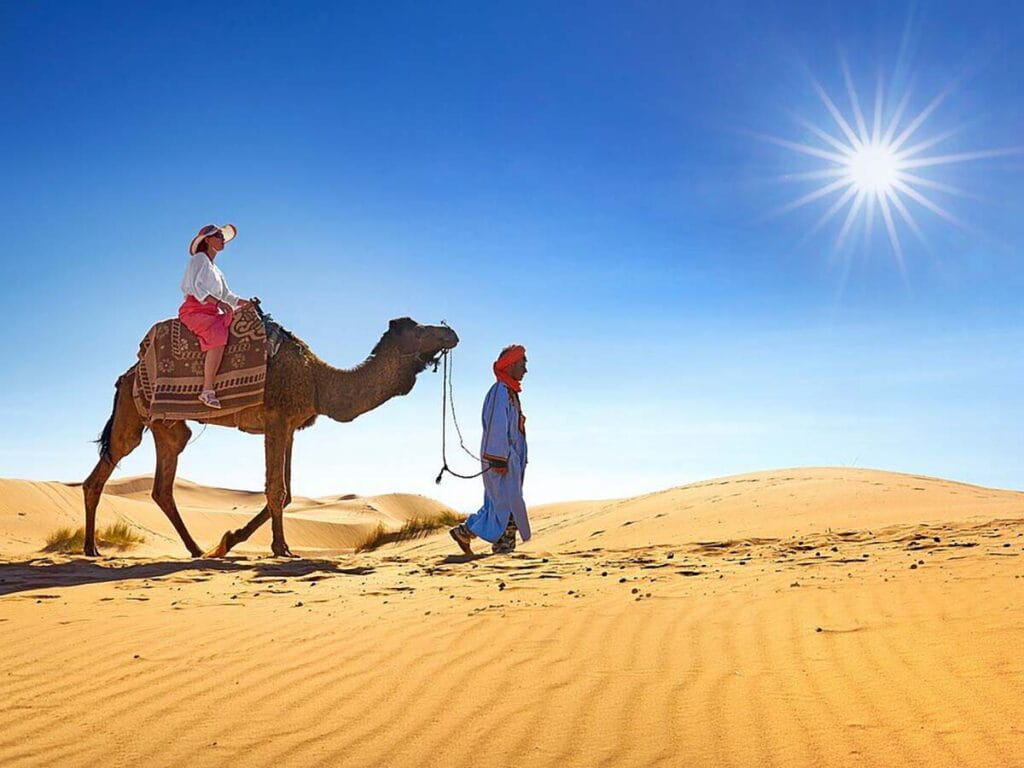
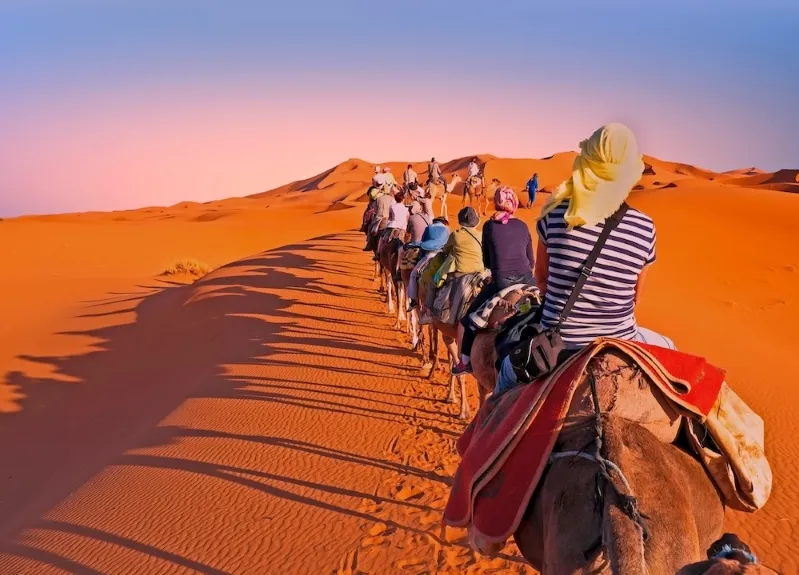
Glamping under the Sahara stars in the giant orange dunes of Erg Chebbi (Merzouga) or Erg Chigaga (Zagora)—or taking a quick luxury getaway to the rocky Agafay Desert near Marrakech—is a signature Moroccan experience. Because desert camps operate off-grid in remote desert locations, prices vary widely based on tent insulation, private plumbing facilities, 4x4 dune transport, and included desert activities. For the shorter Agafay option, see our Agafay desert guide.
Quick reference
per night
Price examples
Typical amounts in MAD
Desert camp rates are almost always quoted per person on a half-board basis (dinner + breakfast included). Prices scale based on camp location, comfort, and luxury tier:
Note the difference between desert regions: Merzouga (Erg Chebbi) offers huge natural sand dunes (9 hours from Marrakech), whereas Agafay Desert (45 minutes from Marrakech) is a stone desert offering luxury pool-resort camps ideal for short stays.
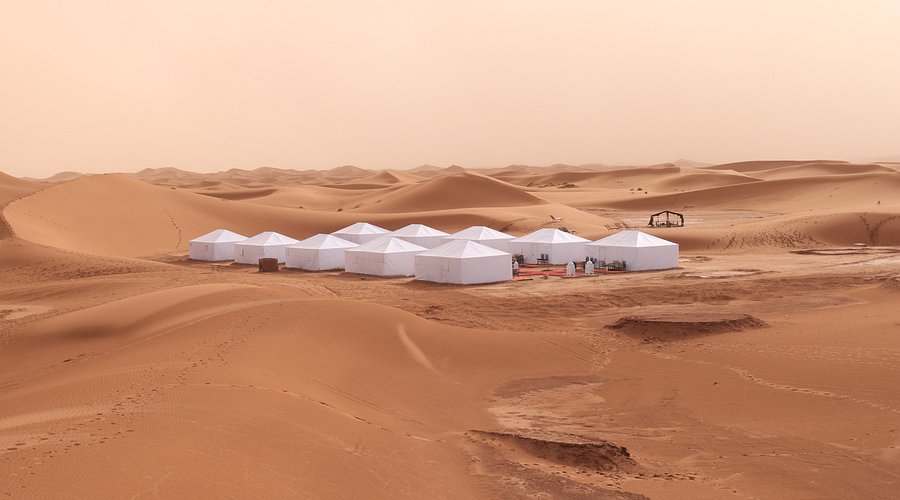
When selecting a desert camp, carefully verify the tent features: basic budget camps feature traditional hair-cloth tents with shared toilet blocks outside, whereas mid-range and luxury camps feature heavy canvas domes with private en-suite flush toilets, hot water showers, and solar electric lighting. Confirm whether camel treks at sunset/sunrise or 4x4 dune transfers from the desert village edge are included in your nightly price.
Desert camp pricing reflects the logistical complexity of supplying fresh water, electricity, fuel, and fresh food into remote sand dune fields. Peak rates apply from October through April when daytime desert temperatures are pleasant, whereas summer months (July/August) see lower rates due to intense heat (over 40°C / 104°F).
Desert region (Erg Chebbi / Merzouga vs. Erg Chigaga / Zagora vs. Agafay stone desert near Marrakech)
Bathroom facilities (Private en-suite flush toilet & hot shower vs. shared outdoor facility blocks)
Tent amenities (Air conditioning in summer, heating/heavy blankets in winter, electrical charging ports)
Inclusions (Half-board dining, sunset/sunrise camel trek, sandboarding equipment, 4x4 luggage transfers)
Entertainment (Campfire live Gnawa or Berber drum performance included)
Seasonality (Peak winter/spring rates vs. discounted summer rates)
Reaching Merzouga or Zagora requires either a 3-day round-trip tour from Marrakech/Fes or driving a rental car to the dune edge, where camp drivers pick you up in 4x4 vehicles or on camels. If your itinerary does not allow for a multi-day journey to the Sahara, an overnight stay at an Agafay Desert camp near Marrakech offers a convenient alternative.
A useful rule when comparing private guide prices
Always clarify if the quoted price includes 4x4 luggage transport into the dunes; riding a camel with heavy rolling suitcases is not practical.
Winter nights in the Sahara (December through February) can drop near freezing (0–5°C / 32–41°F); ensure your camp provides thick wool blankets or heated tents.
Ask if alcohol is served or if you can bring your own wine to dinner, as licensing varies across off-grid desert camps.
If traveling during peak season (Christmas/New Year or Easter weeks), reserve popular luxury glamping camps at least 2 to 3 months in advance.
Bring small cash bills (MAD) for tipping camp staff, camel drivers, and local musicians (50–100 MAD per party).
Budget 800 to 1,200 MAD ($80–$120 USD) per person per night for a comfortable mid-range Sahara camp with a private bathroom, dinner, breakfast, and camel ride included. For a high-end luxury glamping experience with climate control, budget 1,500 to 2,500 MAD ($150–$250 USD) per person.
Common questions
Frequently asked questions
A few practical questions travelers may have before choosing or paying for this in Morocco.
Is staying in a Moroccan desert camp worth it?
For many travelers, yes, especially if experiencing the desert at sunset, seeing the stars and watching the sunrise are important parts of your trip. The experience is most worthwhile when the overnight stay fits naturally into your route rather than requiring a very long detour just for one night.
Do Moroccan desert camps have bathrooms?
It depends on the camp. Basic camps may have shared bathroom facilities, while higher-end camps can have private bathrooms with toilets and showers inside the tent. Check the bathroom arrangement before booking if having a private bathroom is important to you.
Do desert camps have electricity and Wi-Fi?
Many camps provide some electricity, but availability can be more limited than in a normal hotel. Wi-Fi and mobile coverage can also be unreliable depending on the camp's location. Bringing a power bank is a good idea if you need to keep your phone or camera charged.
Can I get to a desert camp without riding a camel?
Often, yes. Some camps and tour operators can arrange a 4x4 transfer instead of a camel ride. This can be useful if you are uncomfortable riding a camel or simply prefer a quicker transfer to the camp.
Does it get cold at night in the Moroccan desert?
Yes. Desert temperatures can drop significantly after sunset, particularly during winter. Even when daytime temperatures are warm, nights can feel surprisingly cold, so bringing warm layers is recommended for an overnight stay.
What food do Moroccan desert camps usually serve?
Dinner and breakfast are commonly included with overnight camp stays. Meals often feature Moroccan dishes such as tagine, couscous, soup, salads, bread and mint tea. The exact menu depends on the camp, so mention any dietary requirements before booking.
Is one night enough at a Moroccan desert camp?
For most first-time visitors, one night is enough to experience the main highlights, including sunset, dinner, the evening atmosphere, stargazing and sunrise. A second night can make sense if you want more time to explore the surrounding desert rather than simply passing through.
What is the difference between a standard and luxury desert camp?
The main differences are usually comfort and private facilities. Luxury camps are more likely to offer proper beds, private bathrooms, hot showers and better furnishings, while standard camps focus on providing a simpler overnight desert experience.
What should I pack for an overnight desert camp?
Bring comfortable clothes, warm layers for the evening, sunscreen, water, a phone or camera and a power bank. A small overnight bag is usually more practical than taking large luggage into the dunes, especially when your main luggage can be left at your accommodation or vehicle.