Morocco price guide
How much does moroccan mint tea cost in Morocco?
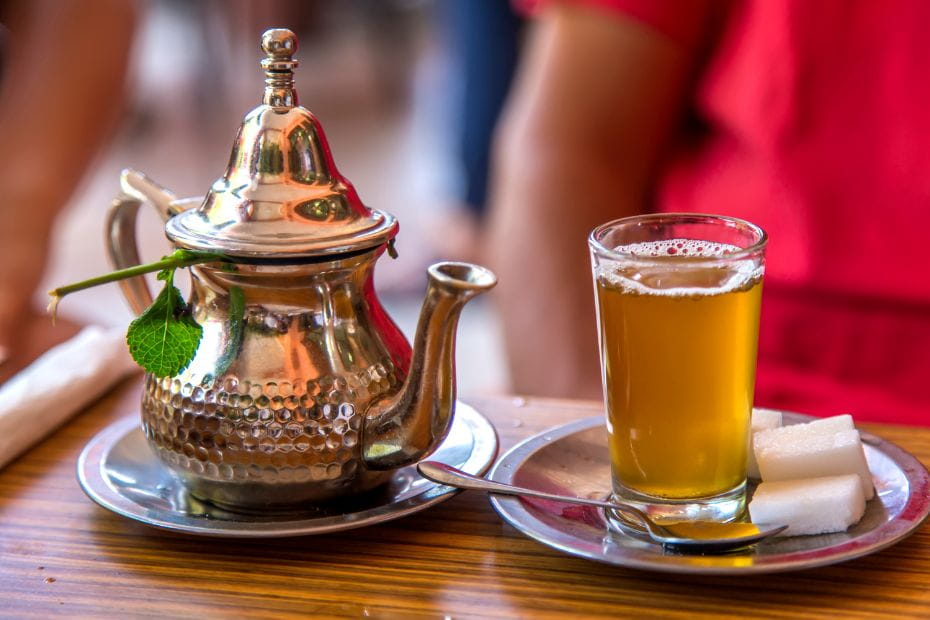
More than just a beverage, drinking mint tea in Morocco is a cherished daily social ritual. Served from morning until late night across every village, city, and Saharan desert camp, tea is poured dramatically from height to create a delicate foam crown (rghawa) that seals in heat and aroma. Prices vary depending on whether you order a single glass (kass) at a busy street stand or a full teapot (berrad) overlooking landmark squares like Marrakech's Jemaa el-Fnaa or Fes's Bab Boujloud.
Quick reference
per glass
Price examples
Typical amounts in MAD
Mint tea pricing is tied directly to location, view, and venue sophistication rather than the cost of raw ingredients:
When ordering, check whether the menu rate is per individual glass (kass) or for a whole teapot (berrad). A small teapot typically fills 2 to 3 small tea glasses.
You never have to search far for tea in Morocco—every café and restaurant serves it constantly. In local street cafés, simply order Atay B'na'na (tea with mint) or specify Bila Soukkar if you prefer it without added sugar. Expect tea to be offered free of charge as a sign of welcome when checking into a Riad, browsing carpet shops, or negotiating in artisan souks.
The cost difference comes down to ambiance, real estate, and service style. Raw ingredients (gunpowder green tea pellets, fresh mint leaves, and sugar) are inexpensive across Morocco. A 10 MAD tea at a local sidewalk café delivers the same high-quality taste as a 35 MAD pot on a panoramic Medina rooftop terrace where you pay for the seating, atmosphere, and view.
Venue type (Authentic neighborhood sidewalk café vs. panoramic Medina rooftop)
Serving size (Single glass vs. small or large traditional silver teapot berrad)
Seasonal herbs used (Fresh spearmint na'na in summer vs. aromatic wormwood sheeba or lemon verbena lwiza in winter)
Location prestige (Jemaa el-Fnaa square or Guéliz boulevard vs. quiet residential streets)
Accompanying sweets (Plain tea vs. tea served with Moroccan almond pastries like Cornes de Gazelle)
Mint tea is the most budget-friendly refreshment in Morocco and an essential cultural experience. Spending an afternoon sipping atay on a shaded rooftop while watching Medina life go by is a top activity for travelers. It is safe to drink everywhere, as the water is boiled vigorously during preparation.
A useful rule when comparing private guide prices
If you dislike extremely sweet drinks, explicitly ask for your tea without sugar (Bila Soukkar) or with sugar on the side (Soukkar Aparte).
During cooler winter months, try regional herbal tea variations like Atay B'sheeba (made with aromatic absinthe/wormwood) or Lwiza (lemon verbena).
Accepting a glass of mint tea offered by a host, shopkeeper, or Riad manager is standard polite etiquette; it carries no obligation to buy anything.
The high pour is functional—it aerates the tea, cools it slightly to drinking temperature, and creates the desirable froth top.
Carry small coin change (2, 5, 10 MAD notes/coins); local cafés often struggle to break 100 or 200 MAD banknotes for a single glass of tea.
Budget 10 to 20 MAD ($1–$2 USD) per day for casual tea breaks at local cafés. Set aside 25 to 40 MAD ($2.50–$4 USD) if you plan to enjoy sunset mint tea on scenic Medina rooftops.