
Morocco Train & Bus Travel Guide (2026): Routes, Prices & Tickets
Complete guide to Morocco trains and buses. ONCF high-speed train routes, CTM bus tickets, foreign credit card workarounds, overnight sleepers, and prices.
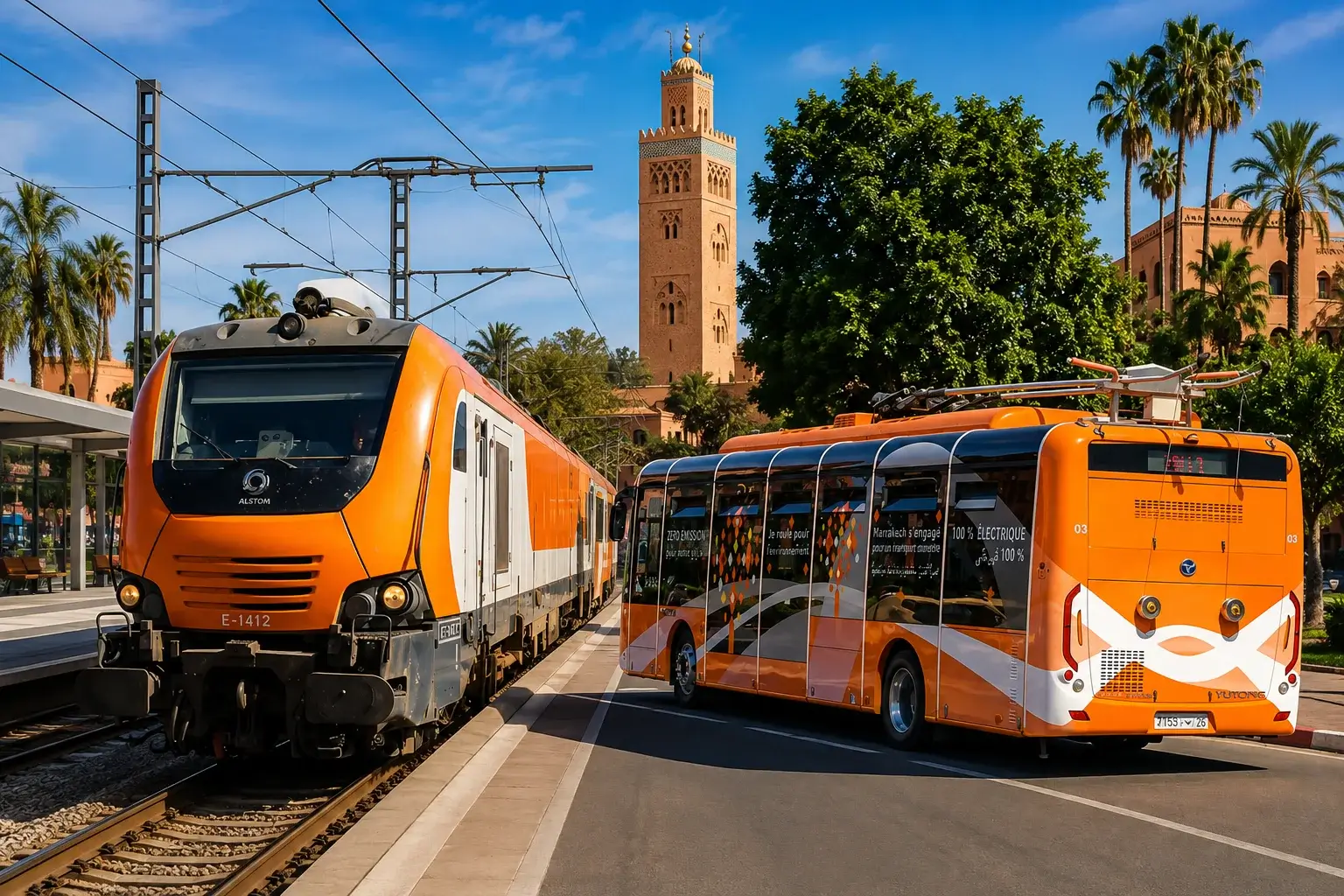
Intercity trains and premium buses form the backbone of public transport in Morocco, offering reliable, comfortable, and budget-friendly travel along major tourist corridors.
The national rail network (ONCF) connects core northern and Atlantic destinations efficiently, while premium intercity buses extend far into regional areas like the Sahara Desert, the Atlas Mountains, and coastal gems like Chefchaouen and Essaouira.
This guide covers exact booking procedures, foreign credit card payment workarounds, the difference between reserved and unreserved seat classes, overnight sleeper trains, and luggage policies for CTM and Supratours buses.
How Morocco's railway network (ONCF) operates
Morocco's rail system is managed by ONCF (Office National des Chemins de Fer) and operates on two main service types: high-speed Al Boraq trains along the northern corridor and conventional Al Atlas trains elsewhere.
The railway links primary destinations including Tangier, Kenitra, Rabat, Casablanca, Fez, Meknes, and Marrakech.
Train stations in major cities (such as Casa-Voyageurs, Marrakech, and Tanger-Ville) are modern, clean, and equipped with bilingual signage (Arabic/French), digital departure screens, ticket windows, electronic kiosks, and cafes.
Foreign Credit Card Online Booking Issue
The official ONCF website (oncf-voyages.ma) frequently rejects foreign-issued Visa and Mastercard payments due to domestic 3D Secure protocols. If your card fails online, purchase your tickets at station kiosks, ticket counters, or through authorized third-party platforms upon arrival in Morocco.
High-speed Al Boraq vs. conventional Al Atlas trains
The flagship Al Boraq high-speed train connects Tangier to Casablanca (via Kenitra and Rabat) in just 2 hours and 10 minutes, running at speeds up to 320 km/h with comfortable seating, power outlets, and a cafe car.
Conventional Al Atlas trains serve longer internal routes, such as Casablanca to Marrakech (approx. 2 hours 45 minutes) or Fez to Marrakech (approx. 6.5 hours).
Al Boraq trains require mandatory seat reservations, while conventional train seat allocations depend strictly on the travel class you select.
First class vs. second class: What travelers need to know
Choosing between First Class and Second Class is not just about seat padding—it dictates whether your seat is guaranteed.
First Class features assigned seat numbers in 6-person air-conditioned compartments or 2+1 open layouts. It guarantees you a designated seat even on sold-out peak routes.
Second Class features unassigned seating (free-for-all). During peak weekend hours, holidays, or popular routes, 2nd Class carriages can become overbooked, requiring passengers to stand in aisles until seats open up.
Overnight sleeper trains in Morocco
Morocco offers an overnight sleeper train connecting Tangier to Marrakech (and vice versa). This is a popular budget choice for travelers wanting to save on a night's accommodation while covering long distances.
Options include single or double private compartments (1st Class Couchette) and 4-berth shared compartments (2nd Class Couchette). Bedding, pillows, and bottled water are provided, and doors lock from the inside.
Book sleeper trains at least 3–5 days in advance, especially during high travel seasons (Spring and Autumn).
Popular train routes, travel times, and prices
Train fares in Morocco are reasonably priced and offer dynamic pricing on high-speed lines:
- Tangier to Casablanca (Al Boraq High-Speed): 2h 10m | ~100 to 250 MAD ($10–$25 USD)
- Casablanca to Marrakech (Al Atlas): 2h 45m | ~100 to 150 MAD 2nd Class; ~150 to 220 MAD 1st Class
- Fez to Marrakech (Al Atlas): 6h 30m | ~200 to 250 MAD 2nd Class; ~290 to 350 MAD 1st Class
- Casablanca Airport (CMN) to Casa-Voyageurs: 45m | ~50 MAD ($5 USD) running hourly
- Tangier to Marrakech Overnight Sleeper: ~9h 30m | ~350 to 600 MAD depending on compartment type
Intercity buses: CTM vs. Supratours vs. local buses
Where the railway ends, intercity buses take over. They are essential for reaching popular destinations like Chefchaouen, Essaouira, Ouarzazate, and Merzouga.
CTM is the national intercity carrier known for modern, air-conditioned coaches and reliable timetables. CTM operates out of its own dedicated private bus terminals in major cities, separate from crowded municipal bus stations.
Supratours is owned by the ONCF railway network. It runs integrated bus services that connect seamlessly with train arrivals (e.g., Train to Marrakech + Supratours Bus to Essaouira or Merzouga on a single ticket).
Local municipal buses (Gare Routière) are cheaper but older, frequently lack air conditioning, make unannounced stops, and do not follow strict departure schedules. Tourists are strongly advised to stick to CTM or Supratours.
Mandatory Bus Luggage Check-In
Unlike trains where luggage is carried onboard free, CTM and Supratours enforce a mandatory luggage check-in for large bags. You must report to the luggage window 15 to 30 minutes before departure to pay a small fee (5 to 10 MAD per bag) and receive a claim sticker.
Popular bus routes, travel times, and fares
Bus ticket prices are fixed by route distance and carrier tier:
- Marrakech to Essaouira (Supratours / CTM): 3h | ~100 to 120 MAD (~$10–$12 USD)
- Fez to Chefchaouen (CTM): 4h | ~110 to 130 MAD (~$11–$13 USD)
- Marrakech to Ouarzazate (CTM / Supratours): 4.5h | ~90 to 120 MAD crossing the Atlas Mountains
- Marrakech to Merzouga / Sahara (Supratours): 12h overnight | ~240 to 280 MAD
On-board facilities & travel etiquette
Understanding on-board amenities helps you prepare for long journeys across the country:
- Wi-Fi & Power Outlets: Available on Al Boraq high-speed trains and select CTM Premium buses. Conventional Al Atlas trains rarely have reliable Wi-Fi or working sockets in 2nd Class.
- Food & Drinks: Al Boraq features a bistro car selling sandwiches and coffee. Al Atlas trains have a roving snack cart. On long CTM/Supratours bus routes, drivers stop every 2–3 hours at highway rest areas with restrooms and restaurants.
- Restrooms: Modern vacuum toilets are available on all trains. Buses generally do not have open onboard restrooms, relying instead on scheduled rest stops.
Summary: Transit Decision Matrix
If your route includes places that trains and buses reach poorly, our car rental guide covers what a road trip actually costs.
Use this quick cheat sheet to pick the right transport mode for your itinerary:
- Take Al Boraq High-Speed Train for Tangier to Rabat/Casablanca trips to save maximum time
- Take Al Atlas Trains (First Class) for major city routes like Casablanca to Marrakech or Fez to Marrakech for guaranteed comfort and assigned seats
- Take Supratours Buses for seamless combined Train + Bus routes to Essaouira, Agadir, or Merzouga
- Take CTM Buses for non-rail destinations like Chefchaouen, paying attention to departure terminal locations
- Avoid local non-branded buses at municipal stations unless you are traveling on an extreme budget and have flexible time
Frequently asked question
Can I buy ONCF train tickets in advance with a non-Moroccan credit card?
The official ONCF website often rejects foreign credit cards due to local 3D Secure bank restrictions. If your card fails, purchase your tickets in cash or by card at station self-service kiosks or ticket counters as soon as you arrive in Morocco.
How far in advance should I book trains and buses in Morocco?
For conventional 2nd Class trains, buying tickets on the day of travel at the station is fine. For First Class Al Boraq high-speed trains, overnight sleeper cars, and peak holiday CTM/Supratours buses, book 2 to 5 days in advance.
Is there a direct train from Marrakech to Chefchaouen?
No. The train network does not reach Chefchaouen. The best route is taking a train to Souk El Arbaa or Fez, then transferring to a CTM or Supratours bus directly to Chefchaouen.
How do I get from Casablanca Airport (CMN) to Marrakech by train?
Take the airport train from inside the terminal directly to Casa-Voyageurs station in Casablanca (approx. 45 minutes). At Casa-Voyageurs, transfer directly to the Al Atlas train heading south to Marrakech.
Do buses in Morocco charge extra for luggage?
Yes. Premium bus companies like CTM and Supratours charge a small baggage fee of 5 to 10 MAD per checked bag at the station luggage window before boarding.
Pro Booking Strategy
If buying ONCF train tickets inside Morocco, use station self-service kiosks to skip main counter lines. For long-distance 1st Class trains or CTM weekend buses, book at least 24 to 48 hours in advance.
Seamless intercity travel across Morocco
Navigating Morocco via train and premium bus is efficient, safe, and cost-effective once you know local operational rules.
By reserving First Class seats on long train journeys, knowing your bus terminal locations, and keeping cash handy for luggage fees, you can travel across the country smoothly and hassle-free. To see how these routes fit together into a full trip, check our 7, 10 and 14 day Morocco itineraries.
Found this useful?
Share it with someone planning a trip to Morocco.
Continue planning
Explore more Morocco travel information
Check prices, explore Moroccan destinations, or estimate your total trip budget.
Browse Morocco Prices
See what travelers typically pay for everyday goods and services.
Explore prices →Explore Moroccan Cities
Discover destinations, local areas, attractions, and practical tips.
Explore cities →Calculate Your Morocco Budget
Estimate accommodation, food, transport, activities, and more.
Calculate your budget →