
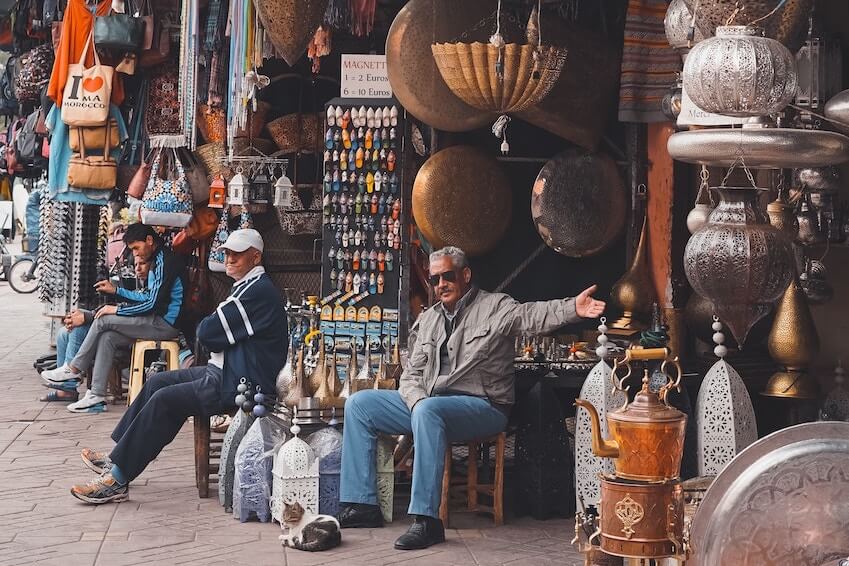
How to Haggle in Morocco: Bargaining Tips for Marrakech Souks (2026)
Forget the 'always offer 50%' myth, real counter-offers depend on quality, not a fixed formula. How bargaining actually works in Morocco and Marrakech's souks, what to say, and when to walk away.
There's no magic percentage that works everywhere, a fair counter-offer depends on the item's quality and material, not a fixed formula like 'always offer half.'
Bargaining is a core social element of shopping in Moroccan souks, but it doesn't mean every single purchase requires a debate. For first-timers, the challenge isn't the haggling process itself it's knowing where negotiation is expected, how to determine a realistic counter-offer, and when a price is already fair.
A successful negotiation isn't about squeezing a vendor down to the last dirham. It is about understanding product quality, establishing a realistic market baseline, and arriving at an amount both sides are satisfied with. For real-world price benchmarks on what to actually expect before you start haggling, see our souk price guide.
With a few practical habits checking fixed-price benchmarks, keeping small cash bills ready, and knowing basic Darija etiquette. bargaining quickly becomes a relaxed, enjoyable part of traveling in Morocco.
Where to bargain (and where prices are fixed)
Before making an offer, confirm whether bargaining is appropriate for the venue. Attempting to haggle in a fixed-price establishment can cause unnecessary awkwardness.
Fixed prices apply strictly in supermarkets, modern retail shops, pharmacies, restaurants, ticket counters, and government-run artisan centers like the Ensemble Artisanal.
Bargaining is expected in traditional medina souks, handicraft stalls, antique shops, street markets, and for unmetered private transfers or guided tours. For metered Petit Taxis, haggling isn't necessary at all, just confirm the driver uses the meter, see our taxi fares guide for what a normal fare looks like by city.
If you are unsure whether a price is firm, ask politely: 'Is this a fixed price?' (' واش ثمن محدود؟ - Wash thaman mahdoud?').
Establish a Baseline First
Visit a government-regulated Ensemble Artisanal before shopping in the souks. The price tags there provide a clear ceiling for high-quality artisanal goods.
The negotiation process: Step-by-step
Always let the seller state the opening price before making an offer. Listen to the number, inspect the build quality of the item, and decide what it is worth to you.
Avoid the widespread travel myth that you must 'always offer 50% of the opening price.' If a vendor quotes 500 MAD for a hand-woven carpet actually worth 400 MAD, offering 250 MAD is an unreasonable lowball. If they quote 1,500 MAD for that same carpet, 250 MAD is still too low, but 500 MAD is a realistic starting counter.
Make your counter-offer slightly lower than your maximum willingness to pay. This leaves room for both parties to step toward a fair middle ground without conflict.
- Let the vendor name the opening price first
- Determine your maximum spend before naming a counter-offer
- Counter with a realistic number based on item quality rather than a fixed percentage
- Keep the conversation lighthearted and polite throughout
Essential Darija phrases and cultural etiquette
Using a few words of Moroccan Arabic (Darija) signals respect, lightens the atmosphere, and shows you are not completely unfamiliar with local trade norms.
Start with a simple greeting before you even ask the price, this alone changes the tone of the whole exchange in your favor.
If a seller offers mint tea during a high-value purchase (such as a carpet or large leather bag), accept it if you are interested. Drinking tea creates a welcoming atmosphere, but it does not legally or ethically obligate you to buy if the final price or product quality doesn't suit you.
If a deal cannot be reached, say 'Shukran' (Thank you) with a smile and walk away. There is no need for hostility or lengthy explanations.
- Salam alaykum ('السلام عليكم') or Bonjour: A greeting before you start, said with a smile
- Bzaf! ('بزاف'): 'Too expensive!' (Use with a smile)
- Akhir thaman? ('آخر ثمن؟'): 'What is your final price?'
- Wash kayn shi nakss? ('واش كاين شي نقص؟'): 'Is there any discount?'
- Shukran, lla ('شكراً، لا'): 'Thank you, no'
Cash strategy: Small bills and exact change
Always carry small dirham notes (10, 20, 50, and 100 MAD) when shopping in traditional souks.
A common issue arises when a buyer agrees on a 40 MAD purchase but only offers a 200 MAD bill. Small vendors frequently run short on physical change or may attempt to bundle additional small items to make up the difference.
When negotiating a bulk bundle (e.g., three ceramic bowls or two leather belts), confirm whether the agreed figure represents the total bundle cost or the price per single piece before handing over payment.
How and when to walk away
Walking away is the simplest, most effective way to test if a vendor's final quote is truly their bottom line. If a seller lets you leave without calling out a lower price, your offer was below their cost floor.
If the seller calls out a lower number as you walk and it meets your target budget, you can step back into the shop and complete the purchase naturally.
Never feel guilty about declining an item after browsing. Vendor demonstrations and product explanations are standard customer service in Moroccan trade, they do not obligate you to purchase.
- Set a firm maximum price limit before starting the discussion
- Walk away calmly if the vendor cannot match your budget limit
- Re-engage only if the seller calls back a number within your target range
- Politely exit immediately if you feel pressured or uncomfortable
Frequently asked questions
How do you haggle in Morocco?
Let the seller name the opening price first, then counter with a number based on the item's actual quality rather than a fixed percentage. Keep the tone friendly, accept tea if offered without feeling obligated to buy, and be willing to walk away if the price doesn't meet your budget.
What percentage should you offer when bargaining in Morocco?
There's no single correct percentage, it depends on the item's real quality and material, not a fixed formula. A vendor's opening price for the same type of item can vary widely, so basing your counter-offer on a fixed percentage of their asking price (rather than the item's actual worth) can lead to either overpaying or making an unrealistically low offer.
Is haggling expected everywhere in Morocco?
No. Bargaining is expected in traditional souks, handicraft stalls, and for unmetered transport, but fixed prices apply in supermarkets, modern shops, pharmacies, restaurants, and government-run Ensemble Artisanal centers, where haggling isn't appropriate.
Do you have to buy something after accepting mint tea from a vendor?
No. Accepting tea is a normal part of Moroccan hospitality during a negotiation and does not create any obligation to purchase. You can still walk away if the price or quality doesn't work for you.
How do you know when to walk away while haggling in Morocco?
Set your maximum price before you start negotiating. If the seller won't meet it, walk away calmly, if they call out a lower number that meets your budget as you leave, you can step back in; if they let you go without countering, your offer was likely below their cost floor.
Travel tip
Carry 20 and 50 MAD bills in an easily accessible pocket so you can pay exact amounts quickly without revealing larger notes from your main wallet.
Negotiate with clarity and ease
Bargaining in Morocco is a practical exchange, not an intense confrontation. Know your baseline values, maintain a friendly approach, and keep small cash bills accessible.
When you focus on acquiring items you genuinely like at prices that fit your travel budget, souk shopping becomes one of the most memorable parts of your trip.
Found this useful?
Share it with someone planning a trip to Morocco.
Continue planning
Explore more Morocco travel information
Check prices, explore Moroccan destinations, or estimate your total trip budget.
Browse Morocco Prices
See what travelers typically pay for everyday goods and services.
Explore prices →Explore Moroccan Cities
Discover destinations, local areas, attractions, and practical tips.
Explore cities →Calculate Your Morocco Budget
Estimate accommodation, food, transport, activities, and more.
Calculate your budget →