How to Spot Fake Souvenirs in Moroccan Souks (2026 Insider Guide)
How to test if leather, rugs, and saffron are authentic before you buy — plus the price-benchmarking trick locals use before entering the souk.
Genuine leather, wool rugs, and saffron all have simple, on-the-spot tests you can run before buying — a burnt-hair smell for real wool, a clear yellow-orange bleed for real saffron, and a natural (not chemical) scent for real leather.
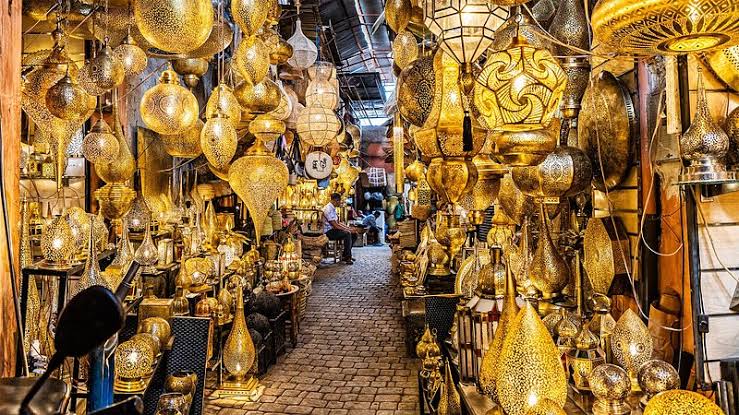
Stepping into a Moroccan souk for the first time is a sensory explosion of aromatic spice pyramids, vibrant hand-woven rugs, rich leather goods, and intricate brass lanterns.
Unposted prices and varying product quality make it hard to know what you're actually paying for. This guide focuses specifically on verifying material quality and spotting counterfeit goods — for bargaining tactics and pricing benchmarks, see our dedicated guides on negotiating prices and souk item prices; for deceptive pricing patterns and pressure tactics (not product quality), see our tourist scams guide.
Benchmark fair prices at the Ensemble Artisanal first
Before stepping into the labyrinthine alleys of the medina souks, visit the government-sponsored Ensemble Artisanal (located on the perimeter of major cities like Marrakech, Fes, and Rabat).
These state-run centers display items with fixed, government-regulated price tags. While souk prices can ultimately be negotiated lower, the Ensemble Artisanal gives you an instant, realistic baseline for what ceramics, leather bags, and metalwork should cost.
Knowing that a standard pair of babouche slippers costs roughly 80 to 120 MAD at a government center prevents you from accepting an inflated opening offer of 400 MAD in the market.
Insider Strategy
Spend your first morning browsing the Ensemble Artisanal to memorize fair price ceilings before stepping into open-air souks.
How to inspect leather quality and detect harsh chemical tanning
Leather goods are a major souvenir staple, but quality varies widely depending on the material (goat, sheep, cow, or camel) and the tanning process.
Inspect the stitching, zipper weight, and lining. Authentic traditional leather from historical tanneries (like Fes's Chouara Tannery) is vegetable-tanned using natural oils, henna, and saffron.
Be wary of items emitting a harsh, pungent chemical or petroleum smell, this indicates rushed processing using synthetic chemicals that will deteriorate quickly and smell foul in warm weather.
How to test if a rug is real wool: the flame test
Buying a rug whether a thick, high-pile Beni Ourain wool carpet or a lightweight Flatweave/Kilim is a dedicated ritual often involving mint tea and viewing dozens of designs.
To verify that a rug is authentic, high-grade wool rather than synthetic acrylic, ask the seller to burn a single loose thread fringe. Natural wool singeing smells like burnt hair and leaves soft ash; synthetic fibers melt into a hard, melted plastic bead.
For large rugs, clarify whether door-to-door international shipping (via DHL or FedEx) and customs documentation are included in the negotiated price before transferring money.
How to spot fake saffron: the water test
Moroccan spice stalls display stunning, colorful cones of cumin, paprika, and Ras el Hanout. However, buying high-value items like Saffron (from Taliouine) requires caution.
Genuine saffron costs approximately 25 to 40 MAD per gram. Vendors selling cheap 'saffron' are often offering dyed corn silk or safflower threads.
To test authenticity, place a thread in warm water: real saffron slowly turns the water a clear yellow-orange while retaining its red thread color. Synthetic dyed substitutes immediately bleed bright red dye into the liquid.
Tea hospitality and unsolicited guides: quick etiquette notes
Moroccan shopkeepers frequently offer fresh mint tea while showing merchandise. Accepting a glass is a traditional gesture of hospitality, not a binding contract to purchase — if nothing catches your eye, simply say 'Shukran' and walk out gracefully.
You may also encounter individuals claiming your intended shop is 'closed today' or offering to show you a 'better workshop' — these unofficial guides typically earn a heavy commission added to your final price. Politely decline with 'La, Shukran.' For more on pricing pressure tactics and how to spot a deal that's changed on you, see our tourist scams guide.
Carry small dirham notes and listen for 'Balak!'
Souk transactions run almost exclusively on cash. Paying for a 20 MAD souvenir with a 200 MAD bill can strain small shop owners who lack change.
Break large bank notes at hotels, supermarkets, or restaurants, and keep a pocket dedicated to 10, 20, and 50 MAD notes and coins.
Lastly, keep your ears open: medina streets are narrow working arteries. When you hear shouts of 'Balak! Balak!' (Make way!), step immediately to the right side of the wall to clear a path for passing handcarts, loaded mules, or scooters.
Frequently asked questions
How do you know if saffron is real in Morocco?
Place a thread in warm water. Genuine saffron slowly turns the water a clear yellow-orange while the thread itself stays red. Fake saffron (often dyed corn silk or safflower) bleeds bright red dye into the water almost immediately.
How do you tell if a Moroccan rug is real wool?
Ask the seller to burn a loose thread from the fringe. Real wool singes and smells like burnt hair, leaving soft ash. Synthetic acrylic fibers melt into a hard plastic bead instead.
How can you tell if Moroccan leather is genuine?
Check the stitching and lining quality, and smell the item. Authentic vegetable-tanned leather has a natural, earthy scent. A harsh chemical or petroleum smell usually means synthetic, rushed tanning that will deteriorate quickly.
What is the Ensemble Artisanal in Morocco?
It's a government-run craft center found on the edge of major cities like Marrakech, Fes, and Rabat, selling items at fixed, regulated prices. Visiting one before shopping in the souk gives you a realistic baseline price to compare against vendor offers.
Souk Shopping Rule
Always keep small cash notes in an easily accessible pocket separate from your main wallet so you don't reveal large cash reserves while paying.
Shop with confidence, not just a lower price
Getting a good deal in a Moroccan souk means as much as knowing what you're buying as knowing what to pay for it. A cheap 'saffron' or a chemically-tanned bag isn't a bargain if it falls apart or turns out to be fake.
Run the simple material tests above before you commit, and pair this guide with our negotiation and pricing guides to shop the souks with real confidence.
Found this useful?
Share it with someone planning a trip to Morocco.
Continue planning
Explore more Morocco travel information
Check prices, explore Moroccan destinations, or estimate your total trip budget.
Browse Morocco Prices
See what travelers typically pay for everyday goods and services.
Explore prices →Explore Moroccan Cities
Discover destinations, local areas, attractions, and practical tips.
Explore cities →Calculate Your Morocco Budget
Estimate accommodation, food, transport, activities, and more.
Calculate your budget →