19 Common Scams in Morocco & Marrakech (2026 Guide)
From taxi fares that change after you agree to fake geodes and a henna tattoo you didn't ask the price for — the deceptive patterns tourists actually run into in Morocco and Marrakech, and how to spot them.
Most travelers who get overcharged in Morocco don't necessarily do anything wrong. Often, they simply don't know what a taxi ride, meal, tour or souvenir normally costs, especially during their first few days in the country.
It is also worth separating a genuine scam from a price that is simply higher than expected. Tourist areas can be more expensive, and many prices in souks and some services are negotiable. The problem starts when a price is hidden, changed after you agree, or you are pressured into paying for something you did not ask for.
This guide focuses specifically on deceptive patterns, situations designed to get you to pay more than you agreed to, not just situations where prices are simply higher than you expected. For baseline pricing and how to negotiate in good-faith situations, see the taxi fares and souk price guides linked throughout.
These patterns come from my experience growing up in Morocco and seeing how souks and everyday transactions actually work. the goal is to explain what's normal so you can spot what isn't.
Before anything else: not every high price is a scam
One of the easiest mistakes to make when traveling is assuming that every product or service has one fixed price. In Morocco, that is not always how things work. A taxi ride, meal, souvenir or activity can cost different amounts depending on the city, location, provider and what is included.
A restaurant in a busy tourist area may charge more than a small local place. A private taxi may cost more than shared transport. A handmade product in a souk may also be priced differently from a similar item in another shop. A higher price alone does not make something a scam.
What should make you pause is a price that was not explained clearly, changes after you agree, or comes with pressure to pay for something you did not ask for.
A useful rule
You don't need to memorize every Moroccan price. Knowing the usual range is usually enough to spot a quote that deserves a second look.
1. A taxi fare that changes after you've agreed to it
The scam pattern here isn't a high fare, it's a fare that moves. A driver quotes one number before the ride, or agrees to use the meter, then names a different (higher) amount when you arrive.
This is different from a fare simply being higher than you expected, that's a pricing question, not a scam. The specific red flag is disagreement about what was actually agreed, especially if the driver acts as though no agreement was made at all.
If this happens, the simplest response is to repeat the number you agreed on and pay that. If the driver won't accept it, involve your accommodation or a nearby business rather than negotiating alone on the street. For what a fair fare actually looks like by city, see our taxi fares guide.
- State the fare (or confirm the meter) out loud before the doors close, so there's no ambiguity later.
- If a driver refuses the agreed-upon fare and becomes aggressive or intimidating, stay calm and call emergency services immediately: Police at 190 (or 112 from a mobile) inside cities, or the Gendarmerie Royale at 177 outside major cities.
- Keep small dirham notes so you're not relying on the driver for change during a dispute.
2. An unsolicited guide in the medina
Morocco's medinas can be confusing at first. The narrow streets and similar-looking alleys make it easy to lose your bearings, and someone may notice that you are looking at a map and offer to show you the way.
The person may genuinely be helping, but an unsolicited offer can also turn into a request for payment or a trip to a shop or place you did not intend to visit.
If you want a guide, choose one yourself and agree on the price and what is included before starting. Official guides carry a visible license badge (sometimes referenced as a 'No. Réf.') and will show it without hesitation if asked. If you don't need help, a simple "No, thank you" is enough. You don't need to explain where you are going.
3. "The road is closed, I'll show you another way"
You may occasionally be told that the road to an attraction, restaurant or shop is closed and that someone can take you another way. Sometimes the information is genuine. The problem is that you have no easy way of knowing whether it is.
If you are unsure, check your map or ask your hotel, riad or another nearby business. You can also continue toward the destination yourself and see what you find.
There is no need to follow someone simply because they tell you that a road is closed. A polite "Thanks, I'll check" is enough.
4. Pressure to accept the first souk price on the spot
Bargaining itself is normal in Moroccan souks and isn't a scam, it's just how prices work in that setting. The pattern worth watching for is pressure: being pushed to decide immediately, told an offer expires in minutes, or made to feel rude for wanting to compare prices first.
A seller opening high isn't deceptive on its own. It becomes a problem when you're not given room to ask questions, walk away, or check a similar item nearby.
If you don't want to buy anything, you can simply say no and leave. Spending time in a shop, being shown products, or accepting tea does not commit you to a purchase.
A useful rule
If you don't know whether a price is reasonable, compare the same type of product at two or three nearby shops before buying.
5. The shop you were "just passing by"
A seller or someone outside a shop may invite you inside because they have a special product, better prices or something they say you won't find elsewhere.
Feel free to look if you're interested, but remember that stepping inside does not mean you have agreed to buy anything. Take your time and leave if you feel pressured.
6. Restaurant extras you did not expect
A meal can look reasonably priced on the menu and still produce a higher bill if additional items or charges were added along the way.
Bread, drinks, side dishes or special items may be charged separately depending on the restaurant. If something is not clear, ask before ordering rather than trying to work it out when the bill arrives.
This matters even more for dishes sold by weight or items where the final price depends on quantity.
7. A menu without clear prices
A menu without prices is not automatically a warning sign, but it leaves you without a useful reference point. If you are ordering something expensive, ask for the price before placing the order.
For food or products sold by weight, also ask how the price is calculated. A quick question before ordering can prevent an uncomfortable conversation later.
8. Vague inclusions on camel rides and other activities
The scam-adjacent pattern with activities isn't the price itself, it's a quote that doesn't say what's included. Two similarly priced desert trips, quad tours or camel rides can differ a lot once you check duration, transport, meals and equipment.
Before booking, ask about the duration, transport, meals, equipment and any other activities included in the price. Get specifics, not general reassurance.
If someone is selling an activity to you on the street, take a few minutes to compare it with another provider before paying.
9. The "special tourist price"
A seller may sometimes quote a price specifically for tourists or describe something as a special offer. That phrase by itself does not tell you whether the price is fair.
Rather than arguing about whether the price is a "tourist price," compare it with similar products or services nearby. A few minutes of comparison can give you a much better idea of what people are actually charging.
10. Paying with a large banknote
This is less about a specific scam and more about avoiding confusion. If you're paying for a small purchase with a large note, it becomes easier to lose track of the change you should receive.
Keep some smaller dirham notes and coins available for taxis, cafés, small shops and other everyday purchases. Before walking away, quickly check the change.
11. Unclear prices for services
Services are often harder to price than products. A guide, photographer, porter, driver or activity provider may charge different amounts depending on what you are asking for.
Before agreeing, ask three simple questions: What is included? How long will it take? Is there anything else I will need to pay for?
Getting those details clear at the beginning is much easier than trying to renegotiate once the service is finished.
12. The rushed purchase
A seller may tell you that an offer is only available for a few minutes or that someone else is about to buy the same item. Sometimes that pressure is simply part of the sales pitch.
For most souvenirs, shopping and activities, you can take a step back and think about it. If you feel rushed, walk away and compare your options.
13. Buying because you feel guilty
It can feel awkward to leave after a seller has spent ten minutes showing you products, offering tea or explaining how something was made. That doesn't mean you have to buy.
A polite "Thank you, but I'm just looking" is enough. Being friendly and respectful does not create an obligation to make a purchase.
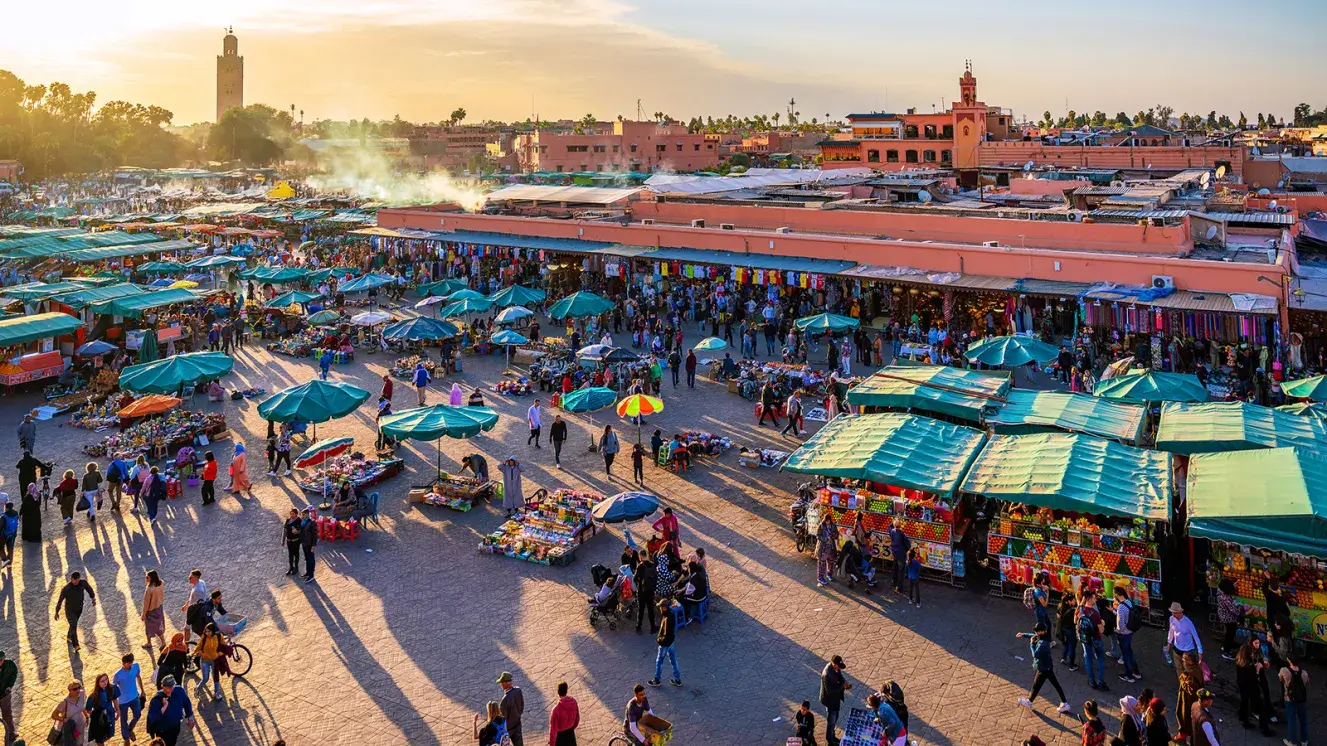
14. Unsolicited photos with monkeys or snakes in Jemaa el-Fnaa
Walking through busy central squares like Jemaa el-Fnaa in Marrakech, performance handlers may quickly place a snake around your neck, put a monkey on your shoulder, or hand you a prop before you have time to react.
Once the animal or item is placed, a handler or accomplice will encourage you to take photos with your camera or phone, then demand a steep fee for the interaction.
If you are not interested in photos with animals, keep a firm posture, avoid eye contact with handlers, and walk past smoothly. If an animal is placed on you, calmly remove it or step back immediately while saying a clear "No, thank you."
- Never hand your phone or camera to animal handlers in public squares unless you have agreed on a fee beforehand.
- Be aware that wild animal performances raise significant animal welfare concerns, which is another reason many travelers choose to pass by.
- If you want a picture, negotiate the total cost for your group before taking out your phone.
15. An unsolicited henna tattoo and a price demand afterward
In squares like Jemaa el-Fnaa and busy medina streets, henna artists sometimes begin applying a design to your hand before a price is agreed, then ask for a steep fee once it's already done.
Once the henna is on your skin, you have very little room to negotiate, so the standard advice is to agree on the exact design and price before anyone touches your hand.
If you're not interested, decline before anyone begins. Arguing over a price after wet henna is already applied is a far worse position to negotiate from.
- Ask the price for the specific design you want before agreeing to anything, not a vague 'pay what you like.'
- Simple hand designs typically cost a modest amount, larger or more elaborate designs cost more, confirm the number first.
- If a price is demanded that you never agreed to, offer what you consider fair and firmly decline to pay more.
16. A "better than the bank" currency exchange offer on the street
A friendly local may approach you offering to exchange your foreign currency at a rate they say beats the banks or official exchange offices. This is one of the more well-documented tourist scams in Morocco.
These street transactions can involve counterfeit bills, short-changed stacks, or a rate that turns out much worse once the cash is actually counted.
Stick to licensed exchange offices, banks, or ATMs, see our currency exchange guide for exactly how these work and what fees to expect.
17. Pre-existing damage or a surprise "cleaning fee" on a rental car
A less obvious scam pattern shows up after your trip, not during it: some smaller rental agencies charge you for damage that was already on the car, or add a cleaning fee that was never mentioned in your contract.
The best protection is documentation, not an argument after the fact. See our car rental guide for a full pre-departure inspection checklist.
- Record a full video walkaround of the car's exterior and interior before you drive off, timestamped and dated.
- Only pay a cleaning fee if it was explicitly stated in your signed rental contract.
18. Fake fossils, minerals, and "ancient" geodes
Morocco is a genuine source of real fossils and minerals, particularly around Erfoud, Rissani, and other towns near the Sahara. That authenticity is exactly what makes fake versions such a common scam, sold at prices that assume you can't tell the difference.
Verifying fossil and mineral authenticity takes a different kind of inspection than checking prices, see our guide on spotting fakes in the souk for practical tests you can run before buying.
19. When you simply don't know what something should cost
Sometimes you are not being scammed at all, you simply have no idea what something normally costs. That is especially common during the first few days of a trip.
You don't need to know the exact price of everything before arriving. Check a few typical prices, ask your accommodation for local advice or compare several providers when possible.
The goal isn't to find one perfect price. It is to get a feel for the normal range so you can recognize when something seems unusually expensive.
What to do if something feels wrong
If you realize that something costs more than expected, try not to panic. Ask what the price includes and decide whether you still want the service.
If you have not agreed to anything, you can simply leave. For larger purchases, keep the receipt or other proof of payment in case you need it later.
- Stay calm and ask for clarification.
- Check what the quoted price includes.
- Walk away if you have not agreed to the service.
- Keep receipts for expensive purchases.
- Check typical prices before making large payments.
Frequently asked questions
What are the most common tourist scams in Morocco?
The most frequently reported patterns are taxi fares that change after being agreed, unsolicited medina guides leading you to commission-paying shops, pressure tactics in souks, and unsolicited photo or henna interactions where a price is demanded only after the fact.
How do I avoid the fake guide scam in Morocco?
Choose your guide yourself rather than accepting an unsolicited offer, and agree on the price and what's included before starting. Official guides carry a visible license badge and will show it without hesitation if asked.
What should I do if a taxi driver won't honor the agreed fare?
Calmly repeat the fare or meter reading you agreed on before the ride. If the driver won't accept it, involve your hotel or a nearby business rather than negotiating alone, and only contact emergency services if the situation becomes aggressive or unsafe.
Are fossils and geodes sold in Morocco real?
Some are genuine, particularly from towns like Erfoud and Rissani near the Sahara, but fakes are common and sold at prices assuming buyers can't tell the difference. Mass-produced, identical-looking pieces and dinosaur teeth still attached to a jaw are common red flags.
Is it safe to exchange currency on the street in Morocco?
No. Offers of a rate 'better than the bank' from a stranger on the street are a well-documented scam risk, sometimes involving counterfeit bills or short-changed amounts. Stick to licensed exchange offices, banks, or ATMs.
Travel Tip
When in doubt, feel free to ask a local shopkeeper or bystander. Moroccans are generally very helpful and can let you know what to expect for your taxi fare.
The easiest way to avoid overpaying
You don't need to spend your trip wondering whether every price is a scam. A better approach is to know roughly what things should cost, ask questions when something is unclear and take your time when someone is pushing you to decide quickly.
Once you get a feel for how prices work, everyday situations become much easier. You can enjoy the souks, take taxis, eat out and book activities without constantly worrying that you are getting the wrong price.
Found this useful?
Share it with someone planning a trip to Morocco.
Continue planning
Explore more Morocco travel information
Check prices, explore Moroccan destinations, or estimate your total trip budget.
Browse Morocco Prices
See what travelers typically pay for everyday goods and services.
Explore prices →Explore Moroccan Cities
Discover destinations, local areas, attractions, and practical tips.
Explore cities →Calculate Your Morocco Budget
Estimate accommodation, food, transport, activities, and more.
Calculate your budget →