
Moroccan Dirham Guide 2026: ATMs, Exchange Rates & Where to Get Cash
You can't buy Moroccan dirhams before you arrive — here's why, plus real ATM fees (20–40 MAD), exchange tips, and how to convert leftover cash back before you fly home.
The Moroccan dirham (MAD) is a closed currency, meaning you generally can't buy it from your home bank before you travel — you'll get your first dirhams from an ATM or exchange counter after you land.
Getting hold of money in Morocco is generally easy, but where you withdraw it and where you exchange it can quietly change how much your trip costs. Dirhams handle everyday life here, and while cards work fine at hotels, larger restaurants, and supermarkets, cash remains essential for taxis, local markets, street food, and small shops.
Your primary options are pulling dirhams from an ATM, exchanging foreign cash (like Euros, USD, or GBP) at a bureau de change or bank, or using a mix of both. Each comes with its own fees, exchange margins, and specific limits.
None of this needs to take up your mental bandwidth on the trip. Just know the current fees, decline dynamic currency conversion prompts, and keep a stash of small notes for daily expenses.
Can you buy Moroccan dirhams before you travel?
Almost always, no. The Moroccan dirham is a closed (non-convertible) currency, which means it isn't freely traded on international markets and most banks and currency exchange counters outside Morocco don't stock it.
A small number of specialty currency exchange services may occasionally offer dirhams in advance, but typically at poor rates and limited availability — it's not a reliable way to prepare for your trip.
In practice, this means your plan should be: bring a travel-friendly debit or credit card and some backup foreign cash (Euros, USD, or GBP), then get your dirhams from an ATM or licensed exchange counter once you land, rather than trying to source them beforehand.
Why this matters for your arrival plan
Since you can't arrive with dirhams already in hand, budget for an ATM withdrawal or currency exchange stop at the airport (even a small one) to cover your taxi or train into the city.
Morocco runs on the dirham
The official currency is the Moroccan Dirham (MAD or DH). You will need cash for petit taxis, souk stalls, casual neighborhood dining, tipping, and entrance fees to historical sites.
Moroccan dirhams are a closed currency, meaning you cannot legally import or export more than 2,000 MAD out of the country. Always aim to spend or convert your remaining cash before going through airport security on your way out.
Banknotes come in 20, 50, 100, and 200 MAD bills. Having a steady mix of small bills and coins (1, 2, 5, and 10 MAD) is critical drivers and street vendors frequently lack change for a 100 or 200 MAD note.
Worth doing
Break your 100 and 200 MAD bills at supermarkets, hotel desks, or larger sit-down restaurants so you always carry small bills for taxis and tips.
ATM or currency exchange which one?
For most travelers, ATMs are the fastest way to obtain cash. Machines are widely available across cities and transport hubs, and withdrawing dirhams directly applies your bank's wholesale conversion rate instead of an exchange desk's manual spread.
Exchanging physical cash makes sense if you bring strong paper currency like Euros, US Dollars, or British Pounds. Licensed exchange offices in city centers often offer competitive rates with zero explicit commission fees.
The best choice comes down to math: balance your home bank's foreign transaction charges against the local Moroccan ATM network's flat fees.
Using ATMs in Morocco: Fees and limits
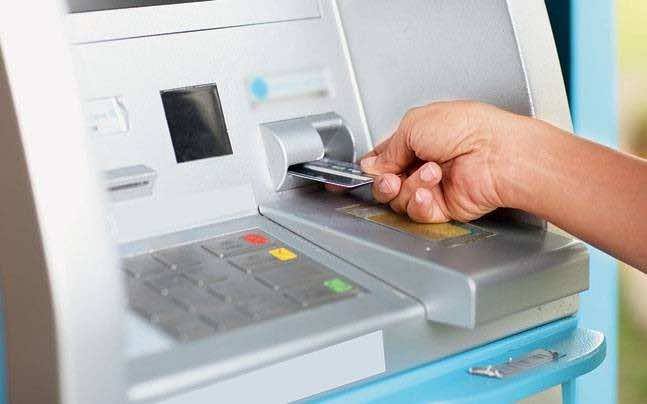
ATMs are abundant in modern city areas, train stations, and near major medina gates. Major banking networks include Attijariwafa Bank, Banque Populaire, BMCE Bank of Africa, and CIH Bank.
Most Moroccan ATMs enforce a per-transaction withdrawal cap between 2,000 MAD and 3,000 MAD. If you need a larger sum, you must perform consecutive transactions.
Nearly all Moroccan bank ATMs charge a local operator fee of 20 to 40 MAD ($2 to $4 USD) per foreign card transaction, on top of whatever foreign withdrawal fee your home bank charges. Al Barid Bank (the postal bank) historically offers lower or zero local access fees for foreign cards.
- Expect a local ATM surcharge of 20–40 MAD per transaction
- Transaction caps usually max out at 2,000–3,000 MAD at a time
- Check if your home bank waives foreign ATM fees (e.g., travel-focused debit accounts)
- Always decline machine-offered conversion to avoid double-digit markups
Dynamic currency conversion: Read before you confirm
When withdrawing cash or paying by credit card, the machine screen may display a prompt asking: 'Charge in your home currency (USD/EUR/GBP)' or 'Charge in local currency (MAD)?'
This feature is called Dynamic Currency Conversion (DCC). Choosing your home currency lets the local ATM or payment terminal set its own exchange rate, which often includes a hidden fee markup of 5% to 12%.
Always select 'Charge in MAD' (or 'Without Conversion'). This forces your home bank or card provider to handle the conversion at official market rates.
Before you hit confirm
Always select 'Without Conversion' or 'Pay in MAD'. Never let a foreign terminal process the transaction in your home currency.
Where to exchange foreign cash safely
You can exchange major paper currencies at official bank branches and licensed currency exchange counters (Bureau de Change). Ensure your bank notes are clean, un-torn, and free of ink markings.
Airport exchange counters are convenient for initial cash right after landing, but they typically offer less favorable rates than downtown exchange offices in cities like Marrakech, Casablanca, or Tangier.
Always ask for an official exchange receipt and keep it stored with your travel documents. You may be asked to present this receipt at the airport if you need to exchange excess dirhams back into foreign cash before flying home.
Look at the final amount
Don't just read the posted rate on the board. Ask how many dirhams you will physically receive after all fees before handing over your currency.
Skip unofficial money changers
You may encounter individuals near medina entrances or transport hubs offering black-market currency exchange rates. Using unofficial money changers is illegal in Morocco and exposes you to counterfeit bills or short-changed stacks.
Stick strictly to licensed exchange offices or bank ATMs. The security and peace of mind far outweigh a negligible rate difference.
Should you exchange money at the airport?
Airport exchange counters or arrivals-hall ATMs are perfect for securing immediate cash for your airport taxi, train ticket, or initial tipping.
Because airport exchange booths take higher margins, convert only a small amount (e.g., 300 to 500 MAD) at the airport to cover immediate logistics, then find a city-center exchange office or bank ATM for the rest of your funds.
Selling back leftover dirhams before you fly home
Since dirhams can't be freely exported or easily exchanged back once you're outside Morocco, plan to convert any leftover cash before or during your departure, ideally in the days before you fly rather than rushing at the gate.
Bank branches and licensed exchange counters in the city, and the currency exchange desks in the departures area, will convert dirhams back to major currencies. Some counters ask to see the original exchange receipt from when you bought your dirhams, so hold onto it.
Airport exchange-back rates are typically worse than city-center ones, so converting most of your leftover cash downtown before heading to the airport, and keeping only your last-minute spending money for the airport desk, gets you a better rate overall.
Can you use credit and debit cards in Morocco?
Card acceptance has expanded rapidly across Morocco. Visa and Mastercard are accepted at mid-range to luxury hotels, modern supermarkets (like Marjane and Carrefour), high-end dining spots, and official train ticket kiosks.
American Express and Discover are rarely accepted outside international luxury hotel chains.
Cash remains indispensable for small medina shops, souks, metered petit taxis, tipping, and local street stalls. Relying solely on a credit card will restrict your mobility and dining options.
Cash security and safety tips
Morocco is generally safe, but crowded places like Jemaa el-Fnaa or busy souk corridors require standard anti-pickpocket precautions.
Avoid carrying all your cash in your pocket. Keep what you need for the day accessible and secure the remainder inside your hotel safe or hidden travel pouch.
- Carry only 300–600 MAD in cash for daily wandering
- Keep large bills (200 MAD) tucked away from easy sight when paying for small items
- Use ATMs located inside bank lobbies rather than standalone street machines
- Double-check that you retrieved your card before walking away from the machine
A simple money strategy for your trip
The ideal approach is a hybrid model: carry a small emergency reserve of physical Euros or US Dollars, use a primary travel-friendly debit card to withdraw dirhams in bulk from bank-lobby ATMs, and use a credit card for hotel bills and larger meals.
By withdrawing larger amounts less frequently (e.g., 2,000 MAD per transaction), you minimize the impact of fixed 20–40 MAD local ATM fees.
Pre-flight checklist before getting cash
A few proactive steps ensure smooth transactions without running into blocked cards or foreign transaction surprises while traveling.
- Notify your home bank of your Morocco travel dates to prevent fraud locks
- Verify your daily international ATM withdrawal limit with your home bank
- Always decline machine-offered Dynamic Currency Conversion (DCC)
- Hold onto exchange receipts to convert leftover dirhams before departure
- Verify local ATM operator fees on the screen before confirming cash releases
Frequently asked questions
Can you buy Moroccan dirhams outside of Morocco?
Generally no. The Moroccan dirham is a closed currency and most banks and currency exchanges outside Morocco don't stock it. A few specialty exchange services may offer small amounts at poor rates, but the reliable way to get dirhams is via an ATM or exchange counter after you arrive.
Is the Moroccan dirham a closed currency?
Yes. The dirham isn't freely traded internationally, and travelers cannot legally import or export more than 2,000 MAD in physical cash. This is why you can't easily buy dirhams before your trip, and should convert leftover cash before leaving the country.
What is the best way to get cash in Morocco?
For most travelers, withdrawing dirhams from a bank-lobby ATM offers the best combination of convenience and rate, applying your bank's wholesale exchange rate plus a flat local fee of 20–40 MAD per transaction. Bringing some backup Euros or USD to exchange at a licensed counter is a good secondary option.
Can you sell Moroccan dirhams back after your trip?
Yes, at bank branches or licensed exchange counters in Morocco, including airport departure counters, though airport rates are usually worse than city-center ones. Some counters ask for the receipt from your original exchange, so it's worth keeping.
What currency is accepted in Morocco?
The Moroccan dirham (MAD) is the only currency used for everyday purchases. Cards (Visa and Mastercard) are widely accepted at hotels, supermarkets, and upscale restaurants, but cash is still needed for taxis, souks, and small local shops.
Travel tip
Never leave Morocco with more than 2,000 MAD in physical currency due to strict export limits. Convert leftover dirhams back to foreign currency at the airport exchange desk using your original transaction receipts.
The easiest way to manage money in Morocco
For most visitors, combining a credit card for major expenses with bulk ATM cash withdrawals for daily spending is the most effective approach.
Always decline dynamic currency conversion prompts, keep small bills handy for quick transactions, and enjoy your time exploring Morocco without worrying about hidden fees.
Found this useful?
Share it with someone planning a trip to Morocco.
Continue planning
Explore more Morocco travel information
Check prices, explore Moroccan destinations, or estimate your total trip budget.
Browse Morocco Prices
See what travelers typically pay for everyday goods and services.
Explore prices →Explore Moroccan Cities
Discover destinations, local areas, attractions, and practical tips.
Explore cities →Calculate Your Morocco Budget
Estimate accommodation, food, transport, activities, and more.
Calculate your budget →