Morocco price guide
How much does amlou (almond & argan spread) cost in Morocco?
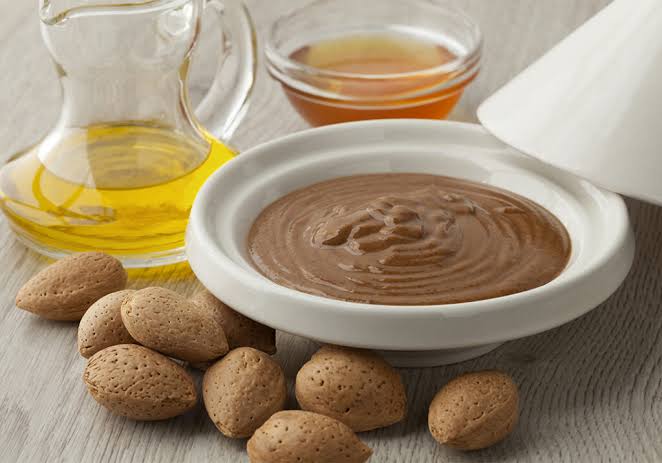
Traditional amlou in Morocco costs 60–150 MAD ($6–$15 USD) for a 250 g jar at a women's argan cooperative, 40–110 MAD ($4–$11 USD) in a supermarket, and 150–200 MAD ($15–$20 USD) or more in tourist shops that offer a free demonstration first, while bulk 1 kg tubs run 180–250 MAD ($18–$25 USD). Made by grinding roasted almonds with culinary argan oil and honey, this thick brown spread comes from the Souss region around Agadir, Taroudant, and Essaouira, where it is eaten at breakfast with bread, msemen, or baghrir, or served as a dip with mint tea. Because it doubles as both an everyday staple and a popular souvenir, the exact same 250 g jar varies widely depending on where you shop—and cheaper versions made with peanuts, hazelnuts, or olive oil instead of almonds and argan oil should cost noticeably less.
Quick reference
per 250 g jar
Price examples
Typical amounts in MAD
Amlou prices depend mainly on where you buy it, the jar size and the recipe. All prices are in MAD per jar, and cover the usual 200–250 g size unless the label says otherwise:
Prices are reference estimates from cooperative price lists, a government regional-products site, an online supermarket and travel guides in 2026, and they change by brand and shop. Some listings show 200 g or 350 g jars, so compare the price per kilo and not the price per jar. Versions without almonds, argan oil or honey are listed separately because they cost less for a reason, and prices abroad do not include import taxes.
For the best mix of price and quality, buy from a women's argan cooperative on the road between Essaouira and Agadir, in Taroudant, or from a certified cooperative shop in the Essaouira or Agadir medina. Prices are fixed, so there is no haggling, and you can usually taste before you buy. Supermarkets such as Marjane carry local cooperative brands, often with a regional-products label, and are usually the cheapest way to buy a sealed jar with a clear ingredient list. In the souks of Marrakech, Fes, Chefchaouen and Essaouira, jars are sold in spice shops and herbalist stalls, where prices are negotiable and quality varies the most. Read the label before you pay. A traditional amlou lists almonds, argan oil and honey and nothing else. Natural amlou is a medium brown paste, not very dark, and a little oil may sit on top. Ask to taste it: almond amlou should taste of roasted nuts with a mild sweetness, not of sugar. If you are quoted a price per kilo, divide it by four to compare it with a 250 g jar.
Three ingredients set the price. Argan oil is pressed from kernels cracked by hand, so it is the costly part, almonds are the second cost, and honey adds sweetness and expense. A recipe with more almonds and real argan oil costs more than one that is stretched with peanuts, sugar syrup or cheaper oil. At a cooperative a 250 g jar of the traditional recipe is typically 60–150 MAD, while supermarket jars of similar size cost less, for example 40 MAD for a 250 g cooperative jar on a government regional-products site and about 90 MAD for a 200 g jar on a large online grocer. A 1 kg tub of almond, argan oil and honey is about 180 MAD from a cooperative on that grocer and about 250 MAD on a general online marketplace, while a 1 kg tub of peanut-and-olive-oil amlou is about 95 MAD. Tourist shops charge the most. After a free demonstration or tea, quotes of 150–200 MAD for a small jar have been reported, which is three to five times the supermarket price. Abroad, a 250 g jar of artisanal amlou costs roughly 18–30 euros (about 190–320 MAD), so buying in Morocco is much cheaper if you pack it carefully.
Where you buy (cooperative fixed price vs supermarket vs souk stall vs tourist shop that offers a free demonstration)
Recipe (almond, argan oil and honey vs peanut or hazelnut with olive oil, with or without honey)
Ingredient proportions (more almonds and real argan oil cost more than a stretched paste)
Jar size (the price per kilo falls from 250 g jars to 1 kg tubs)
Packaging and label (plain cooperative jar vs gift packaging or an organic label)
Location (prices are lowest around Agadir, Taroudant and Essaouira, and higher in Marrakech tourist shops)
Amlou is one of the easiest food souvenirs to bring home, and it is cheapest where it is made. If you are driving or taking a day trip between Essaouira and Agadir, stop at a roadside argan cooperative, where you can watch the oil being made and buy amlou at fixed prices (see our argan cooperative visit in Essaouira). In Marrakech, look for it in supermarkets, cooperative shops and the Ensemble Artisanal, not in the stalls around the main square. Taroudant, in the Souss valley, is another good place to buy it close to the source. Try it the way Moroccans do, spread on msemen or baghrir at breakfast, and see Moroccan breakfast prices for what a café version costs.
A useful rule when comparing private guide prices
Read the ingredients: A traditional amlou lists almonds, argan oil and honey only. Peanuts, sugar, glucose syrup or vegetable oil mean a cheaper recipe, which should cost less.
Taste it first: Cooperatives usually let you try a spoonful. Almond amlou tastes of roasted nuts and is only lightly sweet.
Do the price-per-kilo math: Multiply a 250 g price by four. If a jar works out far below about 180 MAD per kilo, ask what is in it.
Be wary of the free demonstration: A tea and a demonstration in a spice shop is often followed by quotes of 150–200 MAD for a small jar. Compare with a cooperative or supermarket first.
Don't worry about oil on top: Natural amlou separates a little as it sits, so stir it before you eat it. A jar that looks perfectly smooth and glossy may contain stabilizers or extra sugar.
Pack it in your checked bag: A spread counts as a liquid or gel under the 100 ml airport rule used in most countries, so a 250 g jar will usually need to go in checked luggage. Wrap glass jars well, or choose a plastic one.
Check import rules at home: Some countries restrict or require a declaration for honey, nuts or food products in luggage, so look up the rules before you buy large amounts.
Mind allergies: Amlou contains tree nuts, and some versions use peanuts. Honey also means it is not suitable for babies under 12 months and not vegan.
Don't confuse it with argan oil: Amlou is a food spread, and culinary and cosmetic argan oil are different products. See argan oil prices for the oil itself.
Budget 60–120 MAD ($6–$12 USD) for a good 250 g jar from a cooperative, 40–90 MAD ($4–$9 USD) from a supermarket, and 180–250 MAD ($18–$25 USD) for a 1 kg tub. A pair of jars as gifts typically costs 120–250 MAD ($12–$25 USD). If a shop quotes 150 MAD ($15 USD) or more for a small jar, compare it with a cooperative or supermarket before you buy.
Common questions
Frequently asked questions
A few practical questions travelers may have before choosing or paying for this in Morocco.
How much does amlou cost in Morocco?
A 250 g jar costs about 60–150 MAD at a women's cooperative, 40–110 MAD at a supermarket, 30–60 MAD at a market stall and 150–200 MAD at a tourist shop that quotes high. A 500 g jar is roughly 90–170 MAD and a 1 kg tub of almond, argan oil and honey about 180–250 MAD.
What is amlou?
Amlou is a thick brown spread from southern Morocco made by grinding roasted almonds with argan oil and honey. It is eaten on bread, msemen or baghrir at breakfast and served as a dip. It comes from the Souss region around Agadir, Taroudant and Essaouira.
Where is the best place to buy amlou in Morocco?
A women's argan cooperative on the road between Essaouira and Agadir, in Taroudant, or a certified cooperative shop in the Essaouira or Agadir medina. Prices are fixed and you can taste first. Supermarkets such as Marjane are the cheapest way to buy a sealed jar with a clear label.
How can I tell real amlou from a cheap imitation?
Check the label. Traditional amlou lists almonds, argan oil and honey only. Cheaper versions use peanuts, sugar syrup or other oils. Real almond amlou is a medium brown paste that tastes of roasted nuts with mild sweetness, and a price far below about 180 MAD per kilo is a warning sign.
Is amlou cheaper in Essaouira and Agadir than in Marrakech?
Usually yes. Cooperatives around Essaouira, Agadir and Taroudant sell at fixed prices close to the source, while tourist shops in Marrakech and spice shops that offer a free demonstration often quote three to five times the supermarket price.
Can you haggle for amlou?
In souks and spice shops, yes, and you should compare two or three stalls first. At cooperatives and supermarkets the prices are fixed, so there is no haggling.
Can I take amlou on a plane?
Spreads count as liquids or gels under the 100 ml carry-on rule at most airports, so a 250 g jar will usually need to go in your checked bag. Wrap glass jars well, and check your destination country's rules on honey and nut products.
What is the difference between almond amlou and peanut amlou?
Traditional amlou is made with almonds, argan oil and honey. Peanut versions, sometimes made with olive oil, are cheaper, with one online grocer listing a 1 kg peanut-and-olive-oil tub at about 95 MAD against about 180 MAD for almond, argan oil and honey. They are fine if the label says so, but they should cost less.
Does amlou contain nuts, and is it vegan?
Yes, it contains tree nuts, and some versions use peanuts, so check the label if you have an allergy. It is usually made with honey, so it is not vegan, and it is not suitable for babies under 12 months.
What do you eat amlou with?
Moroccans spread it on msemen, baghrir or khobz at breakfast and serve it as a dip with mint tea. It also works on toast or yogurt.