
Ramadan in Morocco 2027: Dates, What's Open & Real Costs
Visiting Morocco during Ramadan 2027 (about 8 Feb to 9 Mar)? See what stays open, whether tourists can eat in public, how prices and transport change, and when Eid falls.
Yes, you can visit Morocco during Ramadan 2027, and most travelers find it easier than they expected. The holy month is expected to start on 8 or 9 February 2027 and end around 9 or 10 March, which puts it entirely in the cool winter months and before the Easter crowds arrive.
What changes is the rhythm, not access. Mornings are slow, local lunch spots close, and the real energy arrives after sunset. Tourist restaurants, hotels, major sights, trains, taxis and tours keep running, and non-Muslim visitors are free to eat and drink, as long as they do it discreetly.
This guide goes further than most Ramadan articles. It uses the 2027 dates, explains why the old advice that 'clocks change during Ramadan' no longer applies after Morocco moved to permanent GMT in September 2026, and covers real costs, transport, city by city differences, and Eid al-Fitr. Prices link to our price pages so you can budget, not just prepare.
When is Ramadan 2027 in Morocco?
Ramadan follows the Islamic lunar calendar, so it moves about 11 days earlier each year. In 2027 it falls in February and early March. The exact start is only confirmed after the new crescent moon is sighted, so treat every date below as expected, not final.
- First day of fasting: Monday 8 or Tuesday 9 February 2027
- Last day of fasting: around 8 or 9 March 2027 (the month lasts 29 or 30 days)
- Eid al-Fitr (called Aid es-Seghir in Morocco): most likely Wednesday 10 March, with 9 and 11 March also possible
- Last ten nights of Ramadan: begin roughly 27 to 28 February
- Laylat al-Qadr (the Night of Power, usually marked on the 27th night): around 5 to 6 March
How the date gets confirmed
Morocco's Ministry of Habous and Islamic Affairs announces the start after the crescent is sought on the evening before (expected Sunday 7 February 2027). Morocco sometimes starts a day later than Saudi Arabia, so keep your first two days flexible and book refundable rooms and tours.
Is it OK to travel to Morocco during Ramadan?
Yes. Tourism carries on throughout the month, and there are no entry restrictions or special rules for foreign visitors. Flights, riads, trains, buses, taxis, desert tours and cooking classes all run as normal.
Many travelers say they enjoyed it more than expected. Daytime streets and souks are calmer, vendors tend to be less pushy, and popular sights and desert routes are often noticeably quieter because many tourists avoid the month. After sunset the cities fill up with families, food stalls and late night energy.
It is not the right choice for everyone, though. If nightlife, easy alcohol, or eating at small local restaurants is central to your trip, read the pros and cons section below before you book.
What actually changes for tourists
Most of the difference comes down to timing. Knowing the pattern makes planning simple.
- Mornings are quiet. Many local cafés and shops open late, often around 10 AM or later.
- Local restaurants and snack bars that serve Moroccans are mostly closed during the day. Tourist restaurants, hotel restaurants and international chains stay open.
- Some attractions close for an hour or two in the middle of the day, or run shortened hours.
- The hour before sunset is hectic. Everyone is shopping or rushing home, and taxis are harder to find.
- Around sunset, the streets go almost silent while families break the fast. Many restaurants pause for 20 to 40 minutes.
- After iftar, everything comes alive. Shops, cafés and squares stay open late, often past midnight.
- Banks and public offices keep shorter hours, so withdraw cash in the morning.
- Alcohol is harder to find (see the alcohol section below).
A typical Ramadan day in Morocco, hour by hour
Times below are approximate for Marrakech and Casablanca in February and March 2027. Check a daily prayer timetable for your city, and remember sunset shifts about a minute or two later each day through the month.
- About 5:30 to 6:00 AM: pre-dawn meal (suhoor) and dawn prayer. The fast begins. You will likely sleep through this.
- 8:00 to 10:00 AM: very quiet. Riad and hotel breakfast is served to guests as usual. Local shops are still closed.
- 10:00 AM to 1:00 PM: the best window for sights and medina walks. Streets are calm and crowds are light.
- 1:00 to 4:00 PM: the slowest stretch. Some attractions pause for a while. Have lunch at an open tourist restaurant, or rest, or book a hammam.
- 4:00 to 6:00 PM: markets fill with people buying food for iftar. The streets get busy and taxis are scarce, especially the last 30 minutes before sunset.
- Roughly 6:10 to 6:40 PM (sunset): the call to prayer, then iftar. Cities go quiet for a short while.
- 7:30 PM to midnight: restaurants, cafés, souks and main squares are at their busiest. This is when to eat dinner.
- After midnight: many Moroccans stay up until the pre-dawn meal, so late evening walks feel lively rather than empty.
Does the clock change during Ramadan 2027? Not anymore
Until 2026, Morocco ran on GMT+1 all year except during Ramadan, when clocks went back one hour to GMT. That is why most older Ramadan guides tell you to expect a time change.
That rule is now outdated. Under Decree No. 2.26.530, published in the official bulletin on 29 June 2026, Morocco returned to GMT permanently on 20 September 2026 and ended the GMT+1 regime. Because Morocco is already on GMT, no Ramadan specific clock change is expected in 2027.
In practical terms, Morocco in February and March 2027 runs on the same time as the UK, and one hour behind France, Spain and Italy until Europe's clocks go forward on 28 March. Check your phone's time zone after landing, and double check the departure time printed on any train, bus or tour ticket booked online.
Check this before you travel
Time zone rules are a recent change and some booking sites and old guides may still show GMT+1 or a Ramadan switch. If a pickup time or train time looks off by an hour, confirm it directly with the operator.
Can tourists eat and drink in public during Ramadan in Morocco?
Non-Muslim visitors are allowed to eat, drink and smoke in Morocco during Ramadan. Article 222 of the Moroccan Penal Code applies to Muslims who openly break the fast in a public place. It does not apply to non-Muslim foreigners.
Even so, discretion is the polite approach. Eat at a restaurant or café that is open rather than walking down a medina street with a sandwich. Keep sips of water brief and low key, avoid smoking in front of people, and be thoughtful around guides, drivers and hotel staff who are fasting.
Muslim travelers who are not fasting should be more careful. The law is aimed at openly breaking the fast in public, so eat inside your hotel, riad or a restaurant that is open instead of on the street. This is general information, not legal advice.
Water is never a problem
Supermarkets and small grocery shops stay open during the day, so you can always buy bottled water. A 1.5L bottle costs 5 to 8 MAD at a shop. See our food prices guide for more.
Are restaurants and cafés open during Ramadan?
Yes, plenty are, especially in tourist cities. Hotel restaurants, riad dining rooms, international chains and cafés that depend on visitors stay open all day, and you can usually sit outside and eat normally. Riads and hotels serve breakfast to guests as usual.
The places that close are the neighborhood snack bars and local cafés aimed at Moroccans. Many reopen at iftar and stay open late. In smaller towns the choice during the day is narrower, so look up your lunch options in advance and keep a backup.
Plan dinner after iftar, around 7:30 PM or later. Some restaurants close briefly at sunset or serve only drinks while the kitchen catches up, so do not expect a table at the exact moment the sun goes down.
- Open all day: hotel restaurants, riad dining rooms, international chains, tourist cafés in Marrakech, Essaouira, Agadir and Tangier.
- Often closed until iftar: neighborhood snack bars, local grills and traditional cafés.
- Tip: ask your riad to arrange an iftar dinner, or to point you to an open lunch spot nearby.
- Foods you will see everywhere in the evening: harira soup, dates, chebakia pastries, boiled eggs, msemen and baghrir pancakes.
Accept an iftar invitation
If a host, guide or shopkeeper invites you to break the fast with them, it is a genuine gesture of hospitality and one of the best cultural experiences available. You are welcome to decline politely if you are tired. A simple 'Ramadan Mubarak' is a warm greeting, and 'Saha ftourek' (enjoy your meal) works at iftar.
Are shops, souks and attractions open?
Most things are open, just on adjusted schedules. In tourist areas of Marrakech, vendors expect early visitors, so you may find shops open earlier than in local neighborhoods. Elsewhere, souks open later in the morning and stay busy until late at night.
Major sights such as the Majorelle Garden, Bahia Palace, Badi Palace and the Saadian Tombs generally stay open during Ramadan, though some close for an hour or two at midday. Check the hours on the day, since they can change during the month.
In Casablanca, the Hassan II Mosque runs a reduced guided tour schedule during Ramadan, mainly in the morning with one early afternoon slot. Confirm current times with the Mosque Foundation before you go, since this is the only mosque in Morocco open to non-Muslims.
- Souks: open, with a later start and a busy late evening.
- Supermarkets, pharmacies and ATMs: normal. Banks and public offices run shorter hours.
- Museums and palaces: usually open with possible midday closures, so check same day.
- Hammams: hours change, so ask your riad to book. See our hammam prices guide.
- Bargaining still works, and sellers are often less pushy. See our negotiation guide.
Is alcohol available during Ramadan?
Alcohol is harder to find. Retail sales from supermarket liquor sections stop, and many independent bars and restaurants stop serving. Some hotel bars and licensed tourist venues, mainly in Marrakech (Gueliz and Hivernage), Casablanca and Agadir, may still serve non-Muslim guests. Each venue decides for itself, so call ahead.
Never carry bottles openly in the street, and avoid drinking anywhere public. If a drink with dinner matters to you, check with your hotel before you arrive. For prices and rules the rest of the year, see our nightlife guide.
What Ramadan 2027 does to your travel budget
Ramadan does not make Morocco automatically cheaper, but it can reduce costs in a few places. Hotel and riad demand tends to be softer because domestic travel slows, though there is no guaranteed discount, so compare prices for your dates.
Timing matters in 2027. Ramadan ends around 10 March and Western Easter falls on 28 March, so prices tend to climb again in the weeks after Eid when European spring holidays begin. For the lowest rates and quietest sights, travel in the first three weeks of the month. See our best time to visit guide for how seasons affect flights and riads.
Everyday prices stay the same. Meters in petit taxis do not change, and the 50 percent night surcharge after 8 PM still applies, which matters because most of your evening travel will be after iftar. See our taxi fares guide.
- Harira soup: 5 to 12 MAD at street stalls and local snack bars, 20 to 35 MAD at tourist cafés
- Chebakia pastries: about 2 to 4 MAD each, or 60 to 85 MAD per kg at local markets
- Local tagine or couscous at iftar time: roughly 40 to 65 MAD at local restaurants
- Mid-range tourist restaurant dinner: 120 to 250 MAD per person
- Hotel iftar buffets: in past years, four and five star hotels in Casablanca, Tangier and Marrakech advertised them at roughly 280 to 450 MAD per adult, often with child discounts. Ask for current 2027 prices.
- Daily budget: unchanged from normal. See our daily budget guide.
Cash tip
Banks and ATMs can be busier before iftar and during the last days of Ramadan. Withdraw cash in the morning, and see our ATM and currency exchange guide for fees and limits.
Getting around: trains, buses, taxis and tours
Public transport runs throughout Ramadan, but timetables can shift. Always check times for your exact date.
- Trains: ONCF adjusts its timetable for Ramadan. In 2025, for example, the Tangier to Casablanca Al Boraq ran 20 trains a day with hourly departures in the morning and early afternoon, plus an extra departure after iftar. Check oncf-voyages.ma for the 2027 schedule. See our trains and buses guide.
- Buses: CTM and Supratours keep running. Demand and ticket prices rise in the last days of Ramadan as people travel home for Eid.
- Petit and grand taxis: available all day, but scarce right before sunset. Allow extra time for any trip in the last 30 minutes before iftar.
- Tours and desert trips: they run normally. Confirm pickup times and meal arrangements when you book.
- Long drives: drivers may be fasting and tired. Schedule long transfers for the morning and expect a stop at sunset so your driver can break the fast safely.
- Driving yourself: city roads are very congested in the hour before iftar, so avoid driving through Casablanca or Marrakech between about 5:15 and 6:15 PM. See our car rental guide.
City by city: what Ramadan feels like
Larger tourist cities are the easiest, and smaller towns need a little more planning.
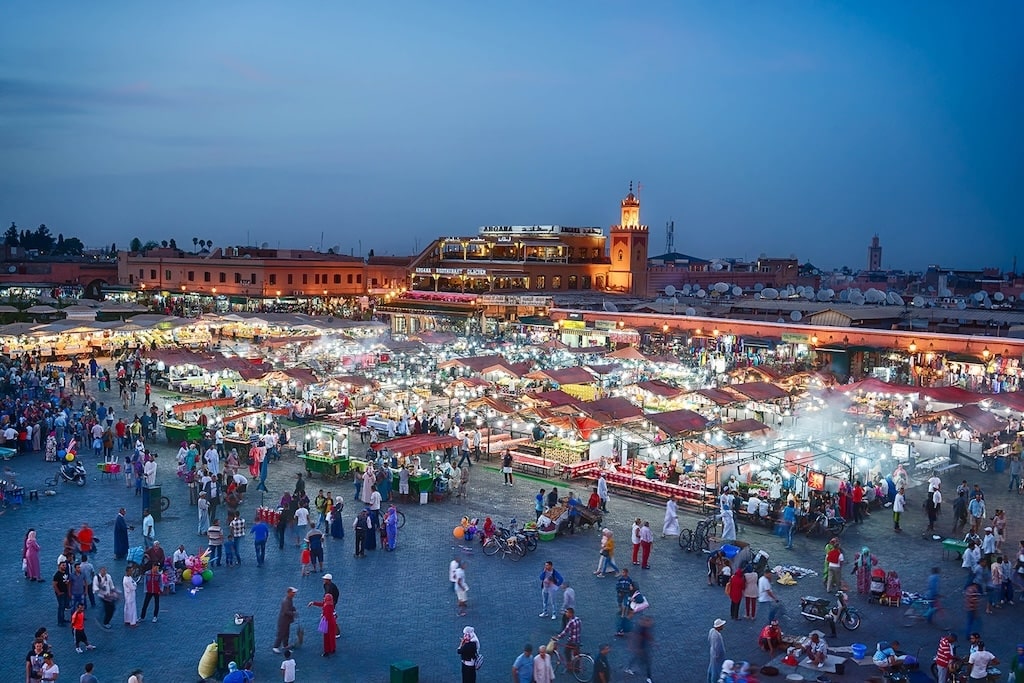
- Marrakech: the easiest big city for tourists. Tourist cafés and rooftop restaurants stay open, souks are calmer by day, and Jemaa el-Fnaa comes alive after iftar.
- Fes: more traditional, so expect fewer daytime restaurants inside the medina. Riad dining rooms and cafés in the Ville Nouvelle fill the gap.
- Casablanca: hotel restaurants, international chains and modern cafés stay open. The Hassan II Mosque runs reduced tour hours, and the Corniche is lively after dark.
- Agadir: a resort town where hotels and seafront restaurants cater to visitors, so lunch is rarely an issue.
- Essaouira: tourist cafés and some restaurants stay open at lunch. Port grills often return in the evening.
- Chefchaouen: expect a smaller choice during the day. Cafés and guesthouse restaurants aimed at visitors remain open.
- Tangier: tourist cafés and hotels stay open, and the corniche is busy after iftar.
- Desert and Merzouga: tours run, but fewer camps stay open, so book ahead and confirm your camp is operating. See our desert tour cost guide.
- Atlas villages and rural guesthouses: coordinate dinner with your host. Eating after about 8 PM is normal, and buying water and snacks from a shop earlier in the day is easy.
Weather and what to pack in February and March
Ramadan 2027 falls in a cool part of the year, which is actually a benefit. Days in Marrakech are typically mild, evenings are cool, and desert and mountain nights can get close to freezing. The north, including Tangier and Chefchaouen, is more likely to see rain. See our best time to visit guide for more on seasons.
Pack warm layers and a light rain jacket. Modest clothing that covers your shoulders and knees is a sensible choice during Ramadan, especially outside modern city districts and beach towns. See our dos and don'ts guide for dress norms.
How to be respectful during Ramadan
A few small habits go a long way. None of them require you to fast or change your trip.
- Eat and drink discreetly in public, and avoid smoking in front of people during the day.
- Dress modestly, especially in traditional neighborhoods.
- Be patient. People who are fasting can be tired by late afternoon, and many still work long hours in tourism.
- Avoid arriving at a riad right at iftar. Arrive earlier or later so your host is not caught between guests and dinner.
- Keep music and noise low around mosques and near prayer times.
- Feel free to ask about Ramadan. Most people are glad to explain what it means to them.
Eid al-Fitr 2027 in Morocco: what to expect
Eid al-Fitr marks the end of Ramadan and is expected around 10 March 2027. It is celebrated for two public holiday days, and the exact date is confirmed after the moon sighting a day or so before.
On the first day of Eid, many small shops, neighborhood cafés and offices close while families visit relatives and eat together. Tourist restaurants, hotels and larger attractions mostly stay open, but expect some closures and quiet streets in local areas.
Travel is the biggest practical issue. The days before Eid see packed stations and higher bus fares as people head home, and ONCF usually adds extra trains but runs fewer on Eid day itself. Book intercity tickets early, avoid traveling the day before and the day of Eid if possible, and keep a flexible plan for the first day.
Book early around Eid
Trains, buses and riads in popular cities fill up in the days around Eid. Reserve transport and accommodation as soon as the date is confirmed, and remember that Easter (28 March 2027) brings another price rise shortly after.
A sample 5 day plan built around Ramadan hours
This Marrakech and Essaouira plan puts sightseeing in the quiet mornings, rest in the afternoon and dinner after iftar. See our itinerary guide for longer routes.
- Day 1: Arrive in Marrakech before late afternoon so you are not caught in the iftar rush. Settle into your riad and eat dinner after 7:30 PM.
- Day 2: Medina sights in the morning (Bahia Palace, Saadian Tombs, Ben Youssef Madrasa). Lunch at an open tourist restaurant, a hammam or rest in the afternoon, then Jemaa el-Fnaa after 8 PM.
- Day 3: Early day trip to the Ourika Valley or the Atlas, back in Marrakech before sunset. Evening in the souks, which stay busy late.
- Day 4: Morning bus to Essaouira (about 3 hours). Walk the ramparts in the afternoon and eat fresh seafood in the evening.
- Day 5: Slow morning in the Essaouira medina, then head back to Marrakech or onward. Avoid traveling in the hour before iftar.
Pros and cons of visiting Morocco during Ramadan
It comes down to what you want from the trip. Here is an honest summary.
- Pro: fewer tourists at major sights, desert routes and in the medinas.
- Pro: calmer, less pushy souks during the day.
- Pro: cool winter weather and often softer hotel demand.
- Pro: a rare chance to experience iftar, night markets and local traditions.
- Con: many local restaurants and cafés are closed during the day.
- Con: limited alcohol and reduced nightlife.
- Con: attractions may close for an hour or two at midday, and some tours and camps run on reduced schedules.
- Con: morning is slow, so early souk shopping is limited, and sunset can disrupt dinner and transport plans.
Ramadan 2027 checklist before you go
A short list of things worth confirming closer to your dates.
- Check the official Ramadan start date around 7 to 8 February 2027, and confirm Eid a day or so before it.
- Confirm all pickup, train and tour times, and note that Morocco is on GMT.
- Look up open lunch spots and save two backup restaurants for each city.
- Ask your riad about iftar dinner, breakfast times and late arrival.
- Withdraw cash in the morning and keep small notes for taxis and tips. See our tipping guide.
- Book trains, buses and accommodation early if your trip overlaps Eid or the weeks after.
- Pack layers and modest clothing for cool days and cold nights.
Frequently asked questions
When does Ramadan 2027 start in Morocco?
Ramadan 2027 is expected to start on 8 or 9 February 2027 and end around 9 or 10 March 2027. The exact date is confirmed by moon sighting, and Morocco sometimes starts a day after Saudi Arabia, so keep your first days flexible.
Is Morocco open during Ramadan?
Yes. Hotels, riads, tourist restaurants, major attractions, trains, buses, taxis and tours all operate during Ramadan. Some local restaurants close during the day and attractions may have shorter hours, but tourists can travel normally.
Can tourists eat and drink in public during Ramadan in Morocco?
Non-Muslim tourists are allowed to eat, drink and smoke, since the law applies to Muslims who openly break the fast. It is polite to be discreet and to eat at restaurants or cafés that are open rather than on the street.
Are restaurants open in Marrakech during Ramadan?
Yes, many are. Hotel restaurants, riad dining rooms, international chains and tourist cafés stay open during the day, while local snack bars and neighborhood cafés mostly close until iftar. Plan dinner after 7:30 PM.
Is alcohol sold in Morocco during Ramadan?
Retail alcohol sales stop and many independent bars close. Some hotel bars and licensed tourist venues may still serve non-Muslim guests, but it varies, so call ahead and never drink in public.
Is Morocco cheaper during Ramadan?
Not automatically. Hotel and riad demand is often softer, so you may find better rates, but taxi fares, food prices and tour costs stay the same. Prices tend to rise again around Eid and the Easter holidays after it.
What time is iftar in Morocco?
Iftar happens at sunset. In Marrakech and Casablanca during February and March 2027 it is roughly 6:10 to 6:40 PM, getting a few minutes later as the month goes on. Check a daily prayer timetable for your city.
Does the clock change in Morocco during Ramadan 2027?
No clock change is expected. Morocco returned to permanent GMT on 20 September 2026, so the old practice of switching from GMT+1 to GMT for Ramadan no longer applies. Double check train and tour times if you booked through a site that may still use old time zone data.
Do trains and buses run during Ramadan?
Yes, but timetables can change and demand rises sharply before Eid. ONCF publishes a Ramadan timetable and extra Eid trains, so check oncf-voyages.ma and book early if you are traveling in the last days of the month.
Is Ramadan a good time to visit Morocco?
It can be. You get smaller crowds, cooler weather, and a chance to see iftar traditions, but you also face closed local restaurants by day, limited alcohol, and shorter attraction hours. It suits flexible travelers who enjoy culture more than nightlife.
What should I wear in Morocco during Ramadan?
Wear modest clothing that covers shoulders and knees, especially outside tourist districts and beach towns. Bring warm layers for cool evenings, and desert and mountain nights.
When is Eid al-Fitr 2027 in Morocco?
Eid al-Fitr is expected on or around Wednesday 10 March 2027, with 9 or 11 March also possible. The date is confirmed after the moon sighting, and Eid is celebrated as two public holiday days.
Travel tip
Do your sightseeing between 10 AM and 1 PM, rest or eat at an open tourist restaurant in the afternoon, and plan dinner for 7:30 PM or later. Following this rhythm turns Ramadan from a limitation into the best part of the day.
Plan around the rhythm, and Ramadan works in your favor
Visiting Morocco during Ramadan 2027 means adjusting your schedule, not giving up your trip. Mornings are for sights, afternoons are for rest, and nights are for food, markets and conversation.
Check the exact dates closer to February, confirm that Morocco is on GMT when you book times, and allow extra time around Eid. With those few details sorted, you get a quieter, cooler and more cultural version of Morocco than most visitors ever see.
Found this useful?
Share it with someone planning a trip to Morocco.
Continue planning
Explore more Morocco travel information
Check prices, explore Moroccan destinations, or estimate your total trip budget.
Browse Morocco Prices
See what travelers typically pay for everyday goods and services.
Explore prices →Explore Moroccan Cities
Discover destinations, local areas, attractions, and practical tips.
Explore cities →Calculate Your Morocco Budget
Estimate accommodation, food, transport, activities, and more.
Calculate your budget →